METAL BUTTON

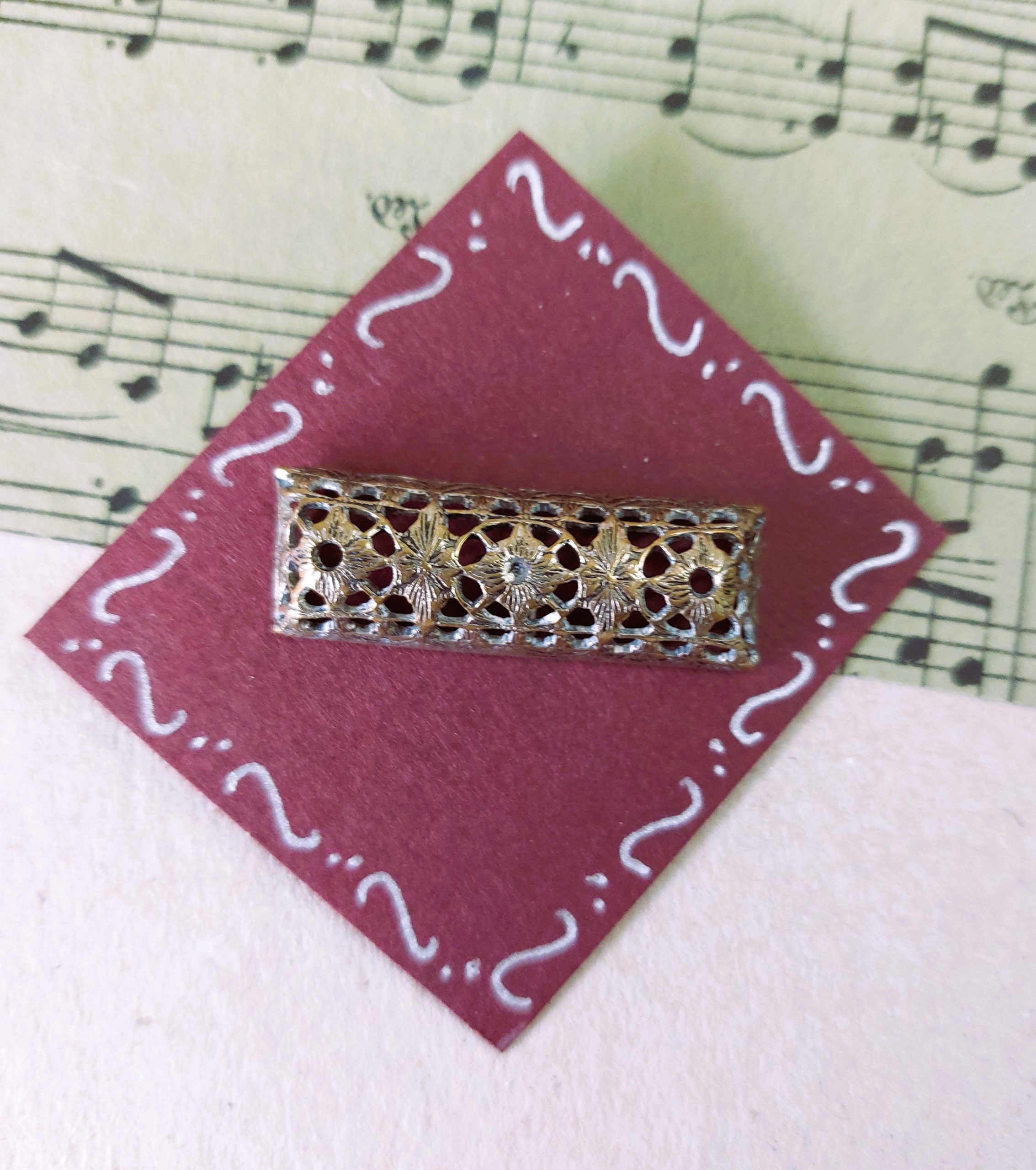
This metal button is log shaped and domed. The design has been pierced into the metal making it quite decorative. It has a metal loop shank and measures 3 1/2 cm. It would be an awkward shape to suit a garment not knowing whether to put it vertical or horizontal.
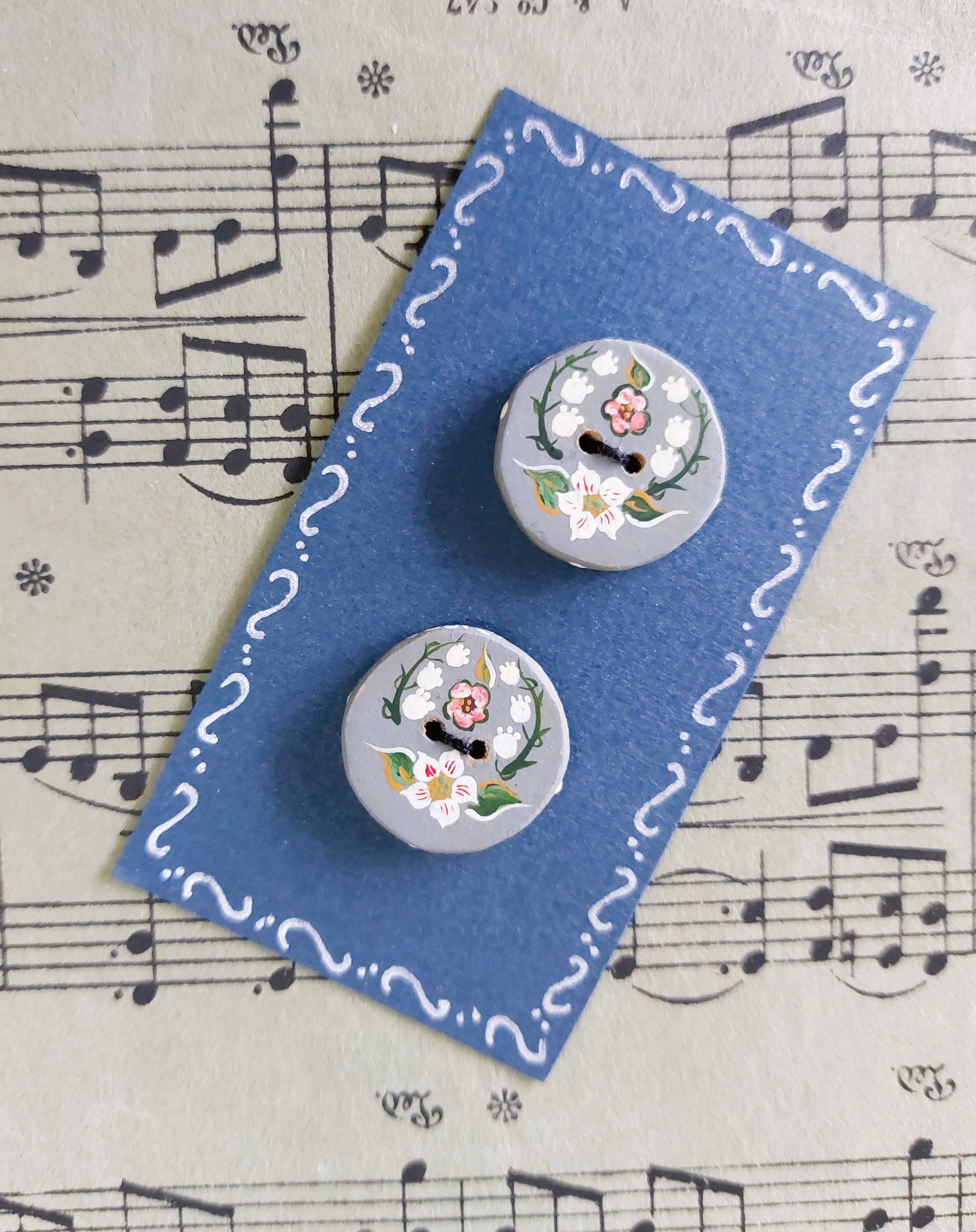
WOODEN BUTTONS

Here are two hand painted wooden buttons in the Folk Art style depicting flowers. They are signed around the edge : D. Corden C 1993 and are a sew through type. She must have done quite a few as there were many at the Melbourne Buttonfest where I bought them several years ago.

CELLULOID BUTTON

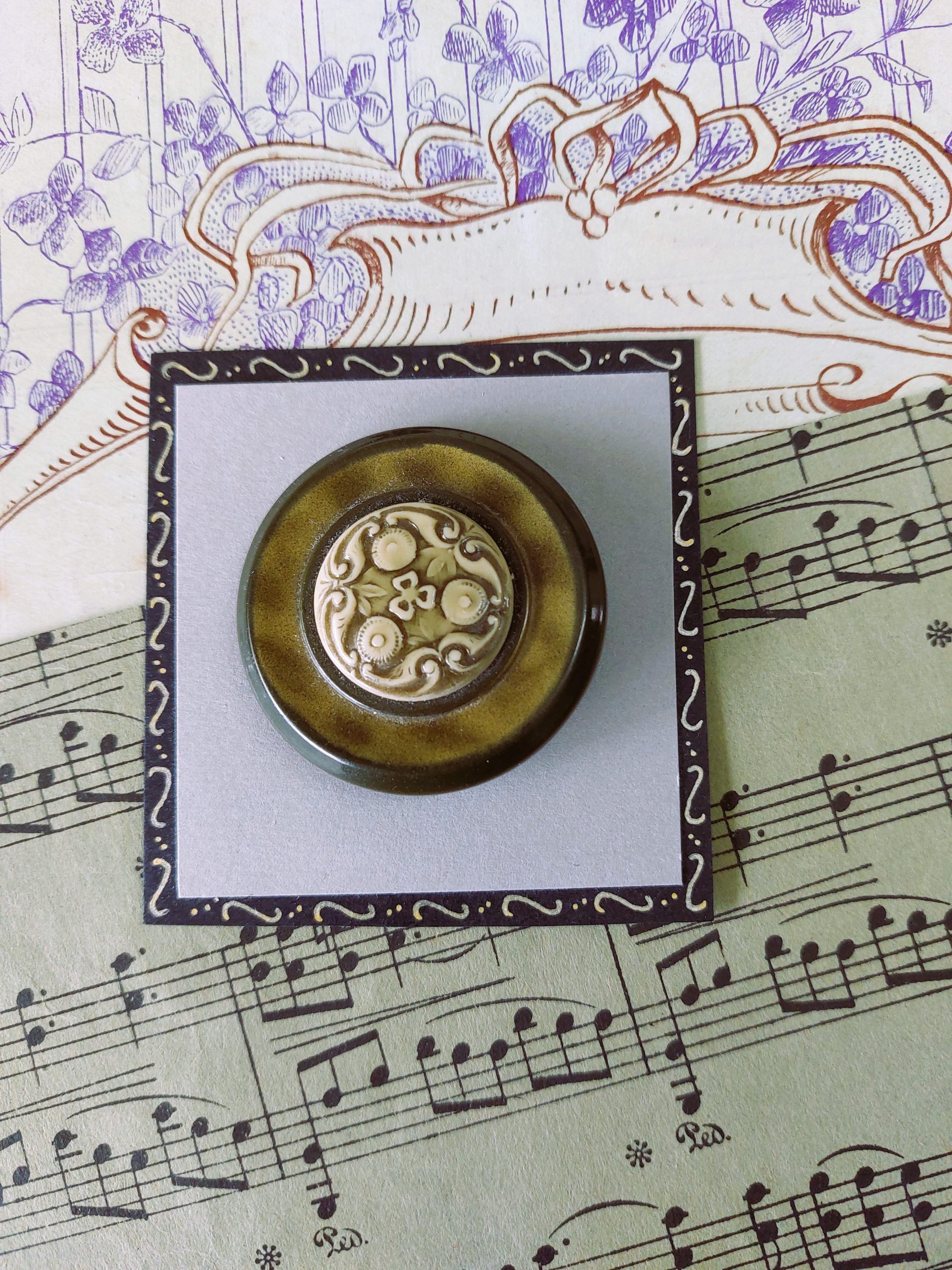
This Celluloid button is a dirty greeny brown colour and has a raised centre piece which is buffed showing a decorative pattern. It has a japanned back and measures a little over 4 cm. It would make a really nice overcoat button.

METAL BUTTON

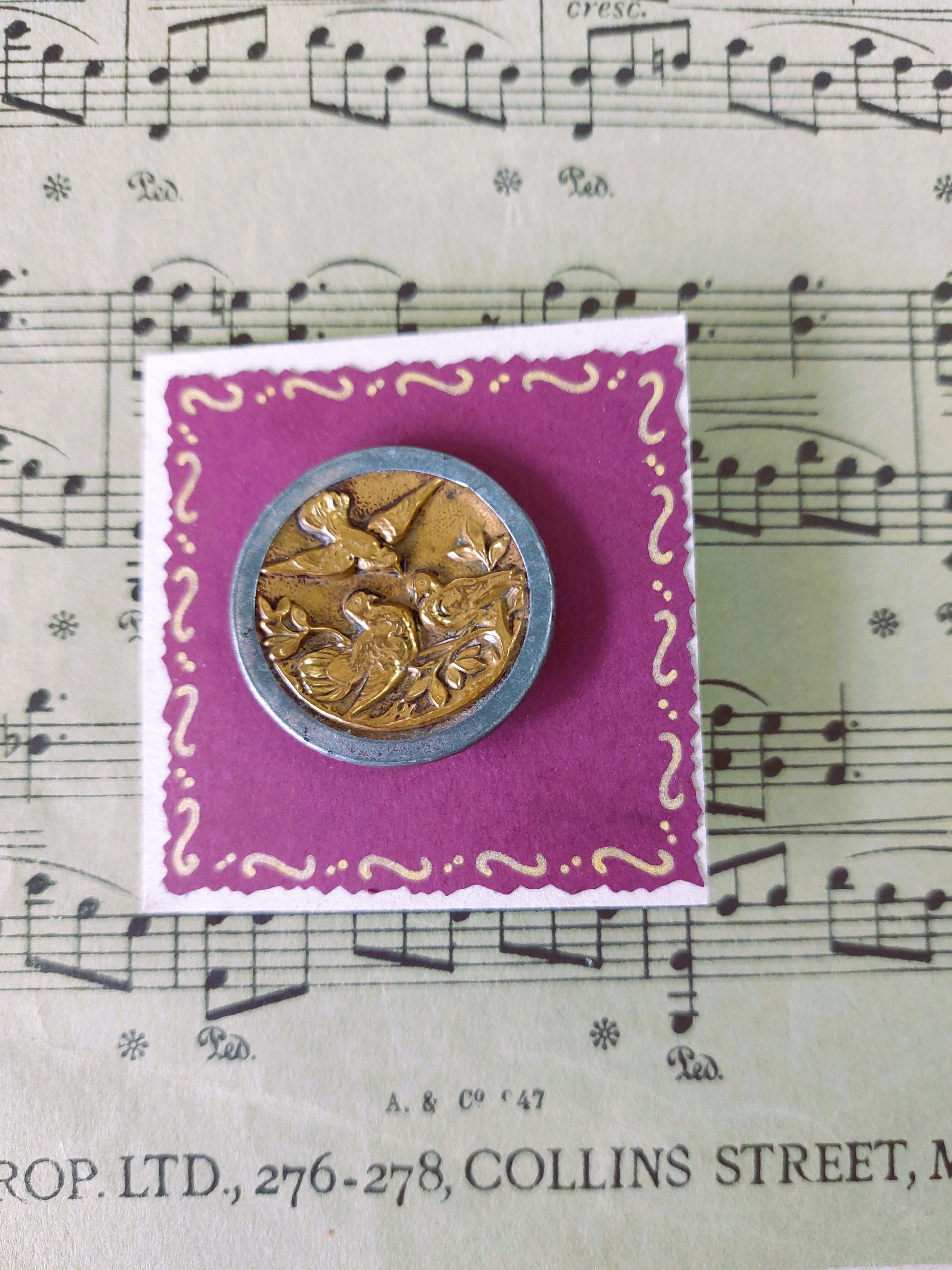
Here is a metal picture button showing three birds in a bush. The central picture is of brass and is set in a white metal border which is a little battered. I don’t know if it is really old or just well worn. It has a japanned back and metal loop shank.

CELLULOID BUTTON

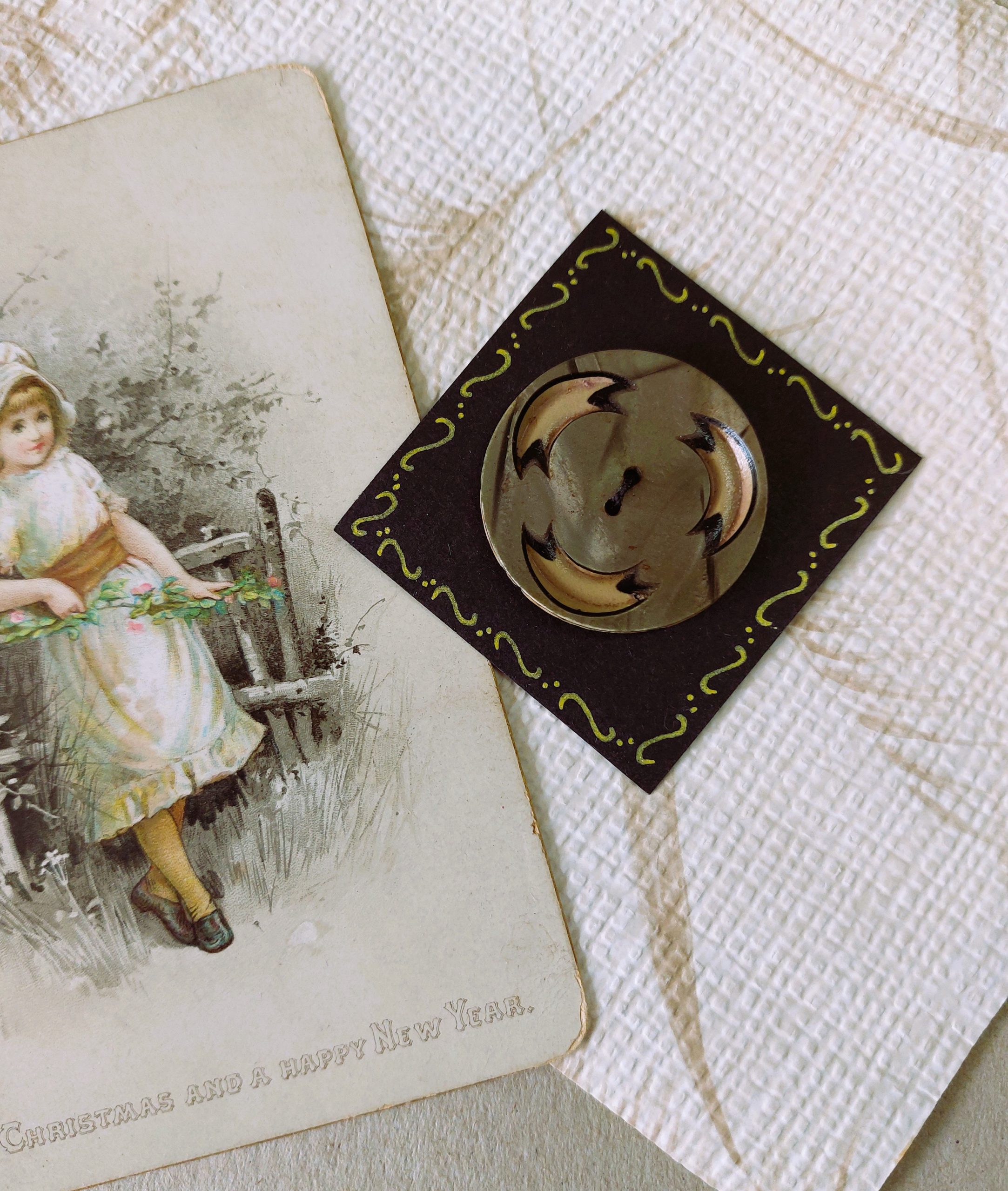
Here is a wafer type Celluloid button made of two layers where the top layer design is cut away to reveal the underneath colour. The colours are very subtle being a dull greeny grey with the underneath a light apricot colour. It measures just under 3 1/2cm. I have a few of this type of button.

CELLULOID BUTTON

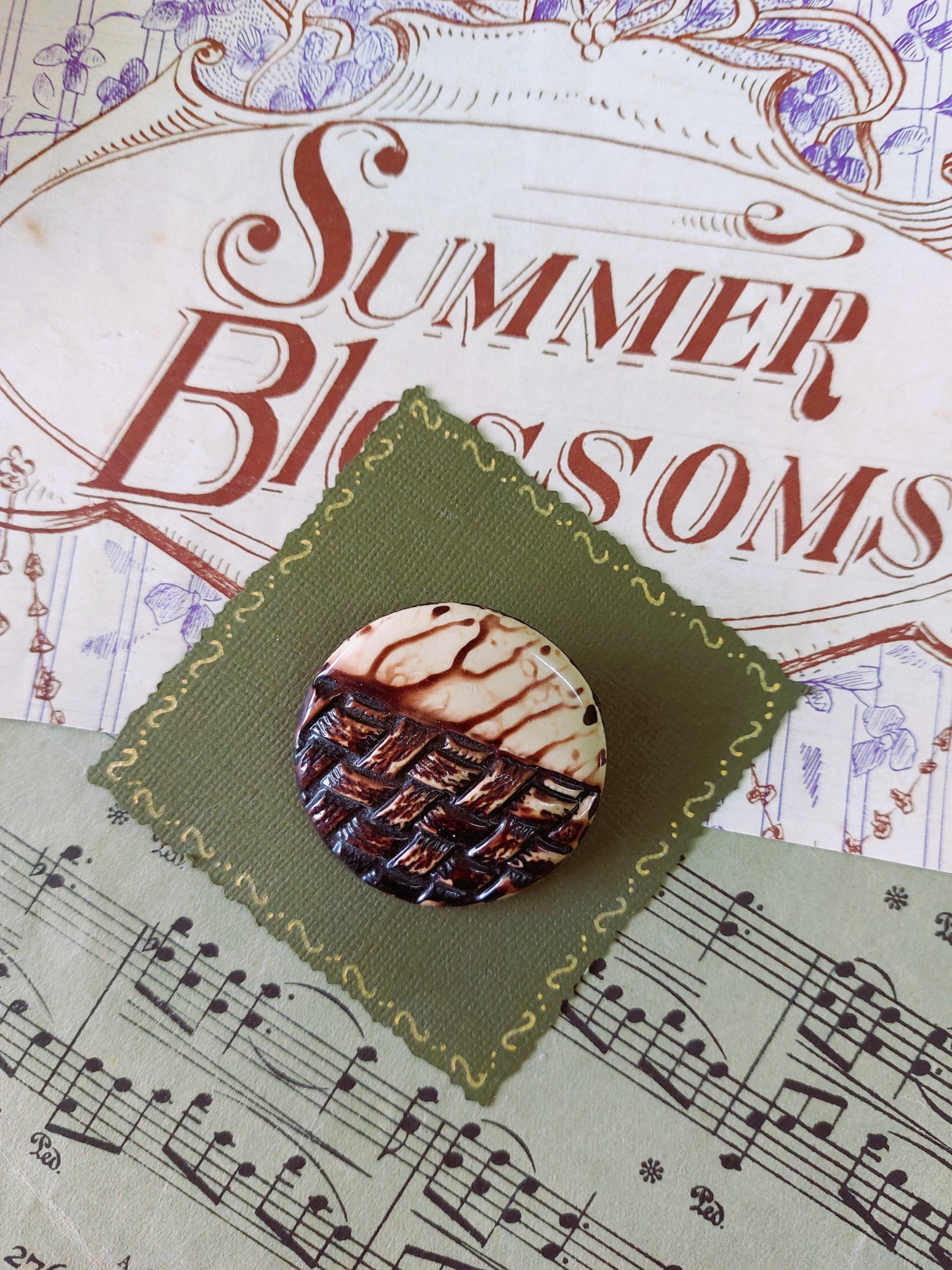
This single sheet Celluloid button is pressed with a basket weave type pattern and is dyed brown which contrasts nicely with the natural cream colour of the top half. It has a self shank and measures 4 cm so is quite large.

WOODEN BUTTON

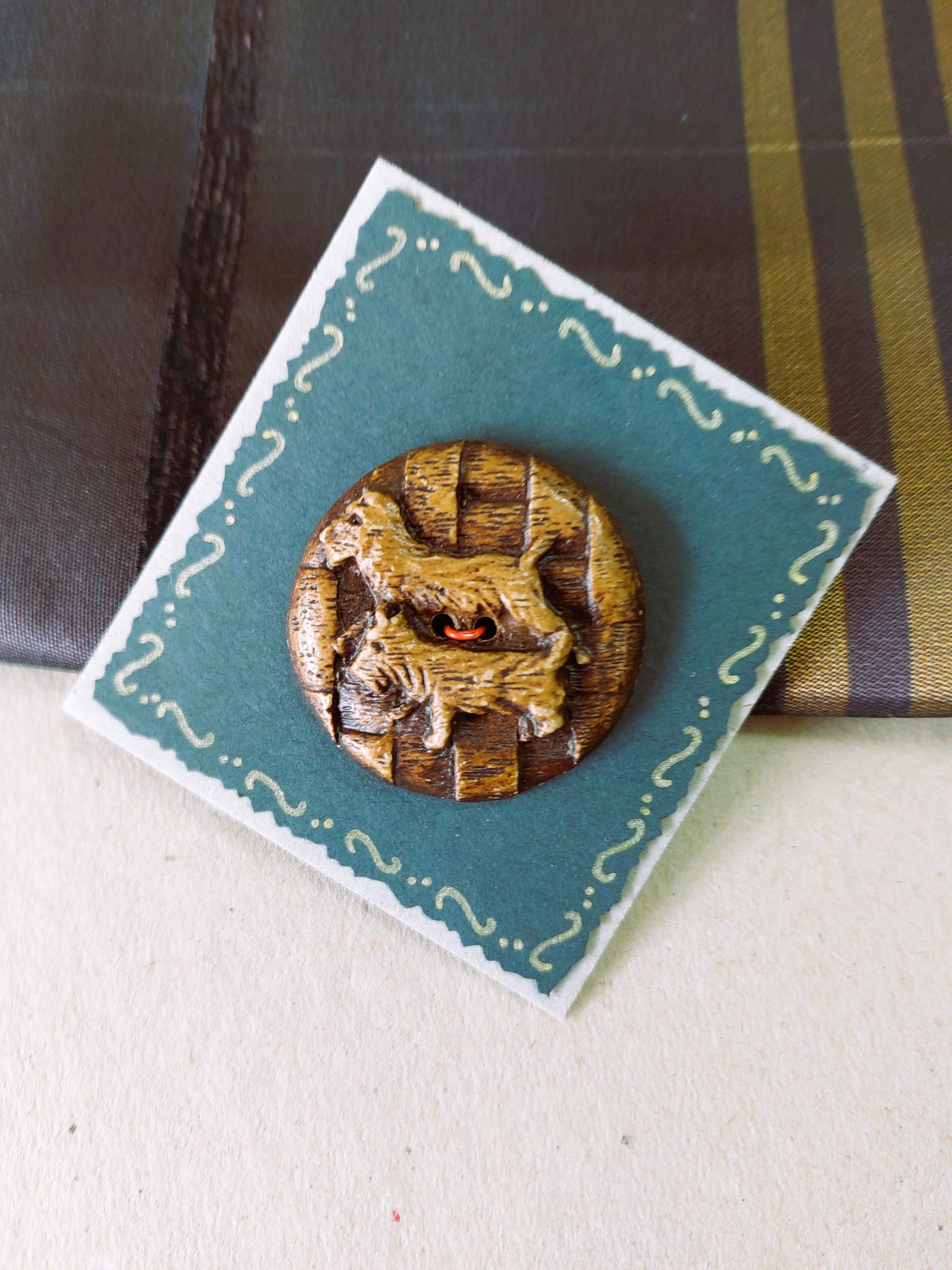
This pair of Scottie dogs button is made of pressed wood and comes from the 1930s. It is a sew through type. It is in the Big Book of Buttons and measures 3 1/2 cm. I wonder what type of garment it would have been worn on; perhaps a woollen overcoat.

MOTHER OF PEARL BUTTONS

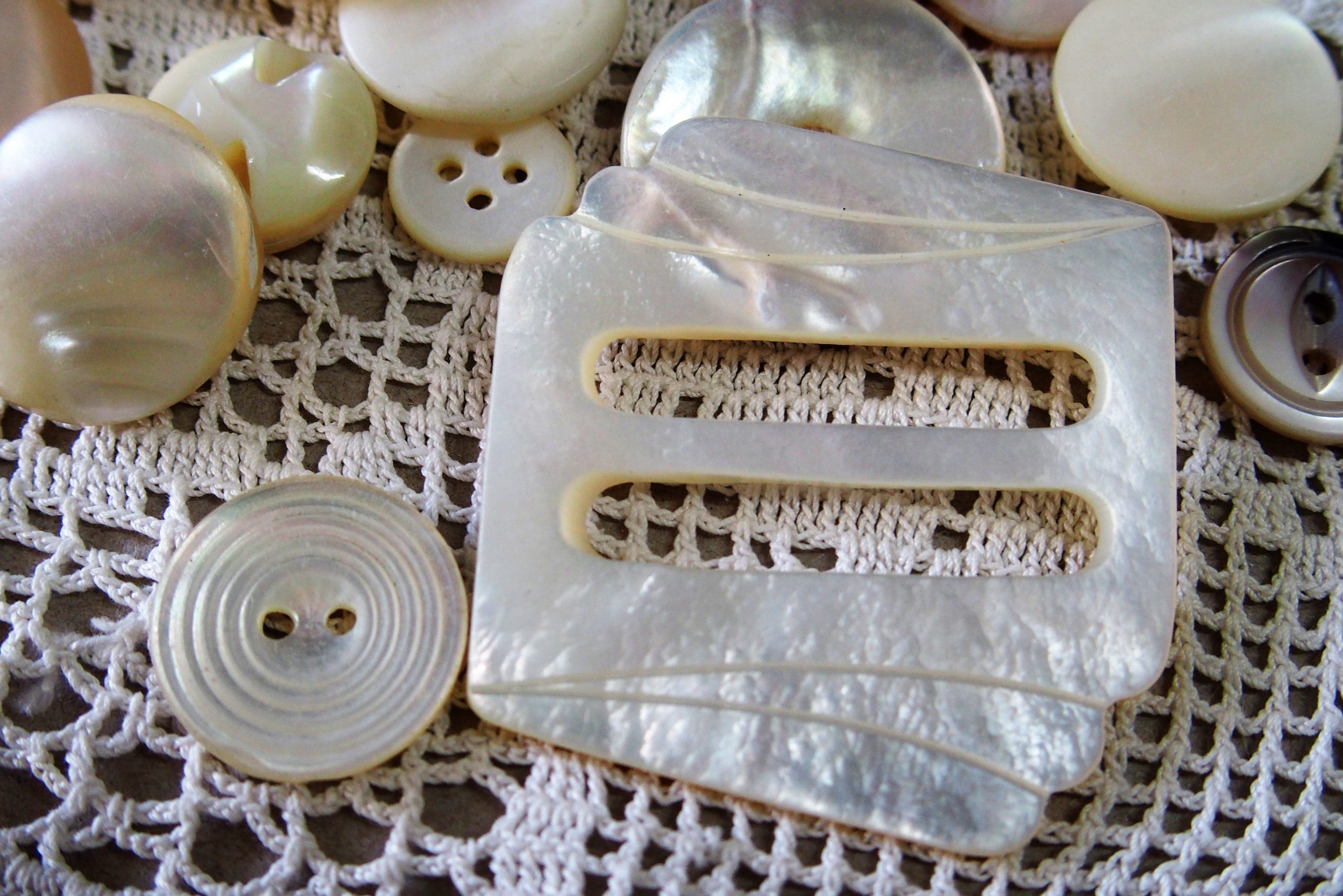
Here is a simple MOP buckle looking like an Art Deco style. Some MOP buttons add to the picture. They were good plain embellishments that would go with many different patterned materials.

CELLULOID BUCKLES

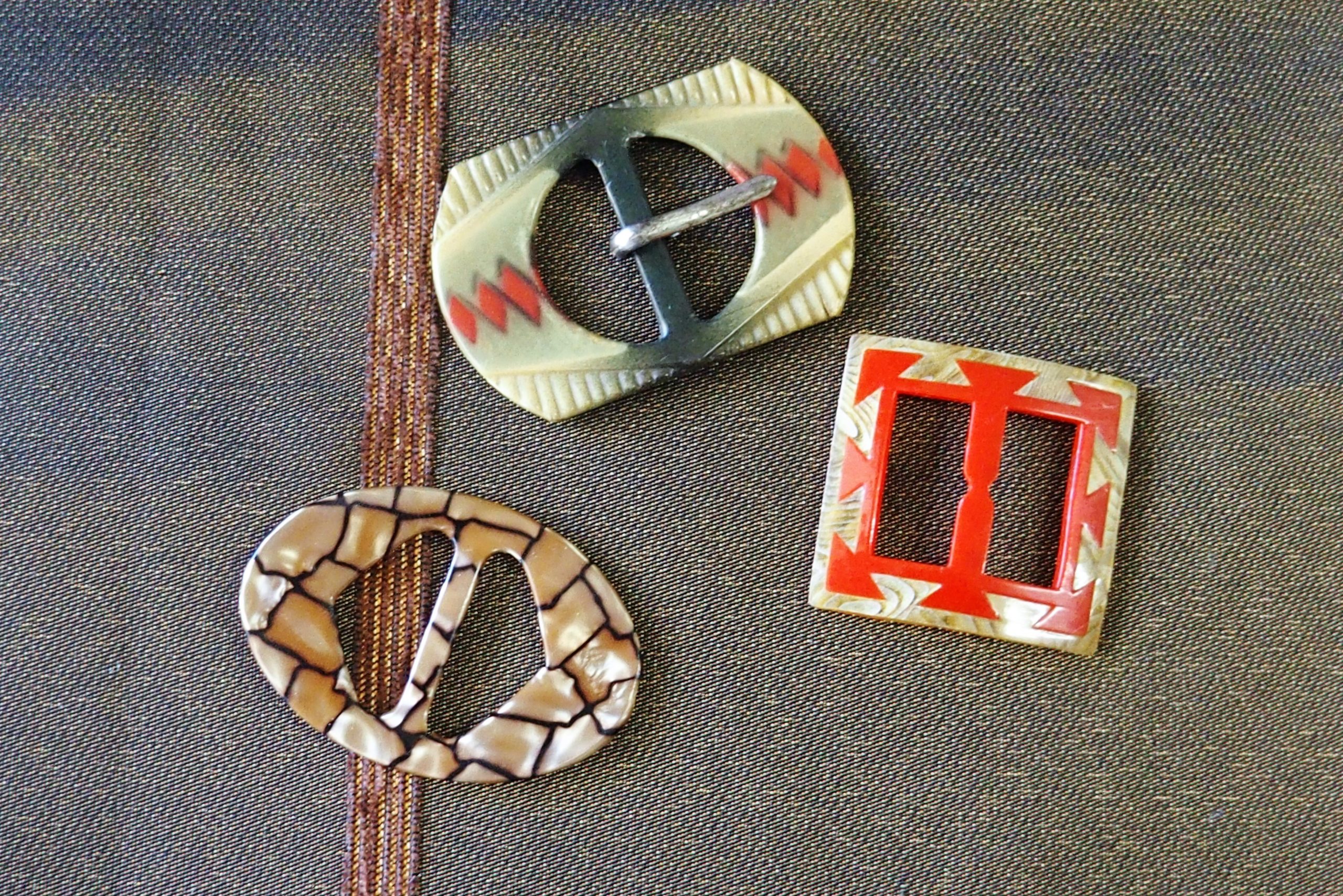
These three celluloid buckles I think are from the 1930s and have an Art Deco look about them with their geometric patterns. They are different in shape and colour scheme and would certainly add interest to the appropriate dress. I have quite a few buckles and they are as interesting as buttons to collect.

PLASTIC BUCKLES

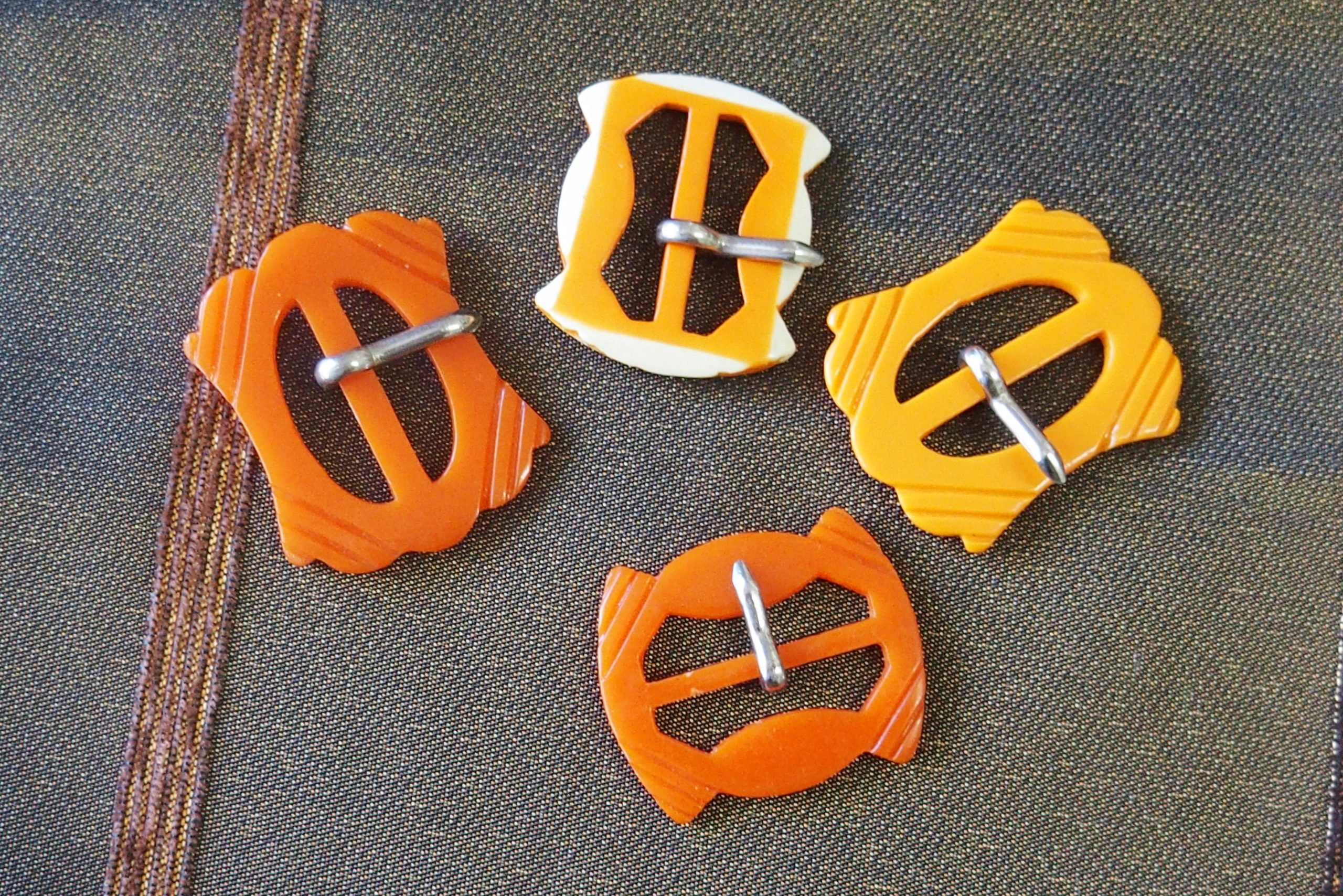
Here are four plastic buckles from around the 1940s. Orange and yellow were not really common colours then; people favoured pink, blue, red and green and black or white were good standard colours to go with many materials. These are two standard shapes and only rely on a little carving or the addition of white to vary them. A buckle could make a real difference to the dress just the same as a good choice of buttons.