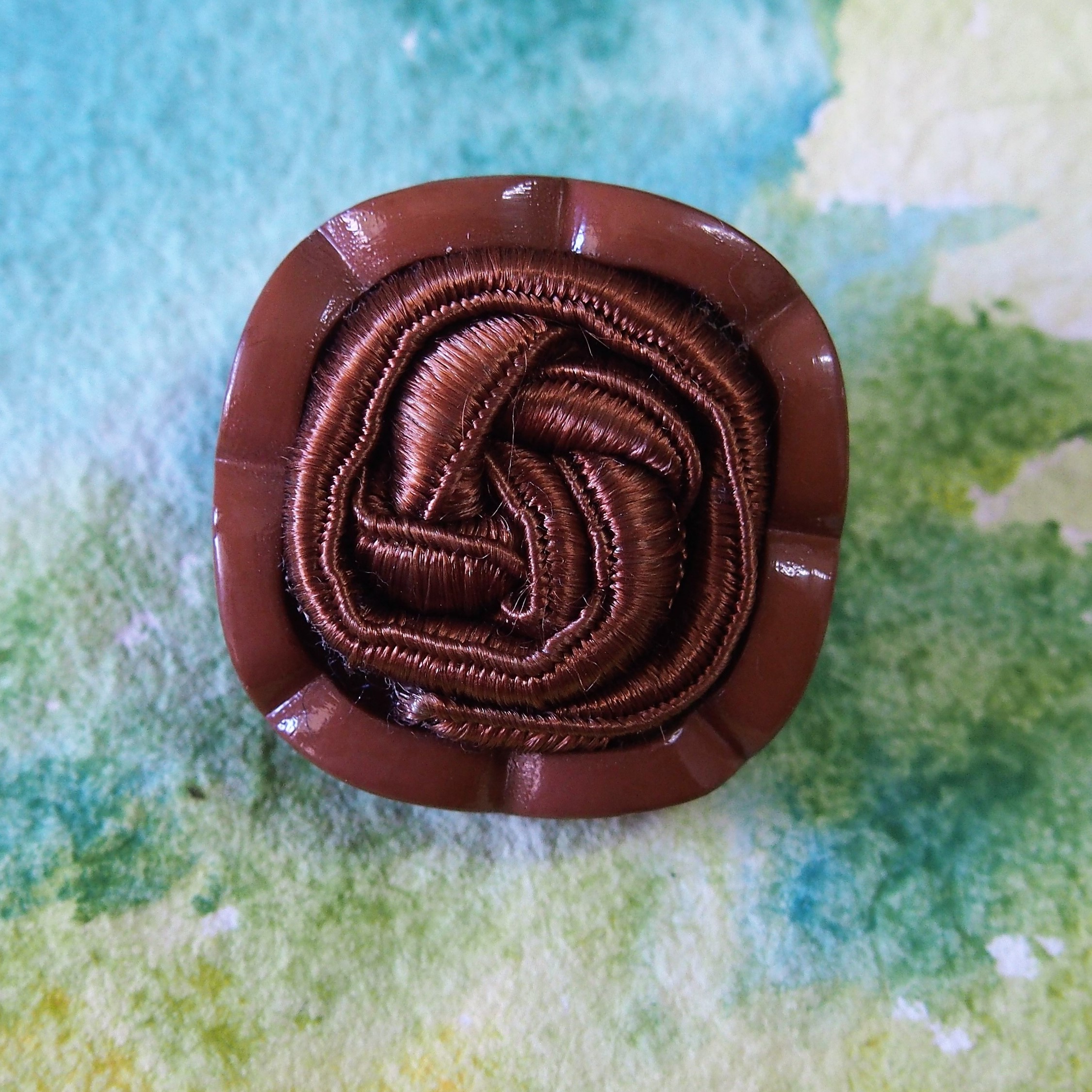
FABRIC BUTTONS

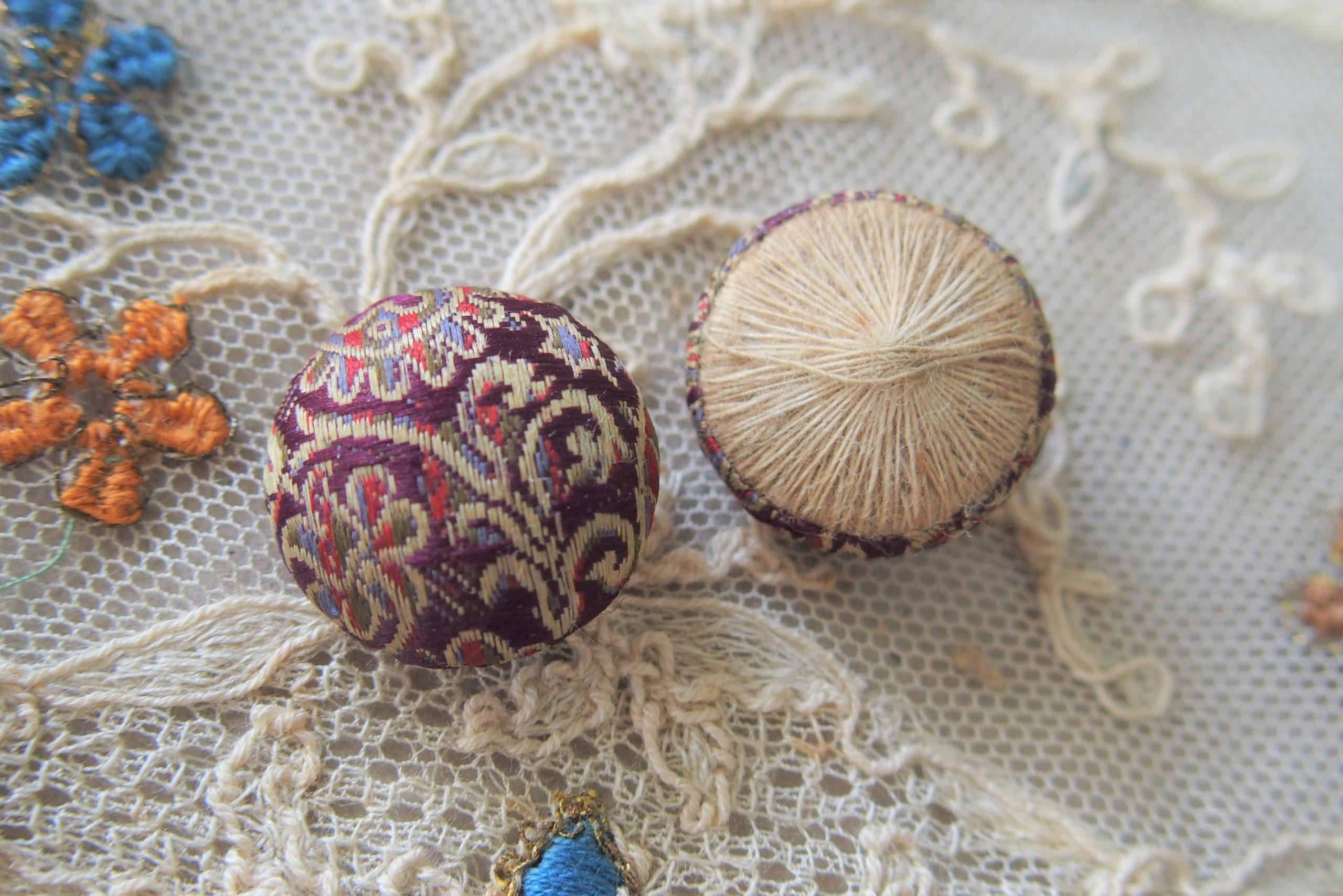
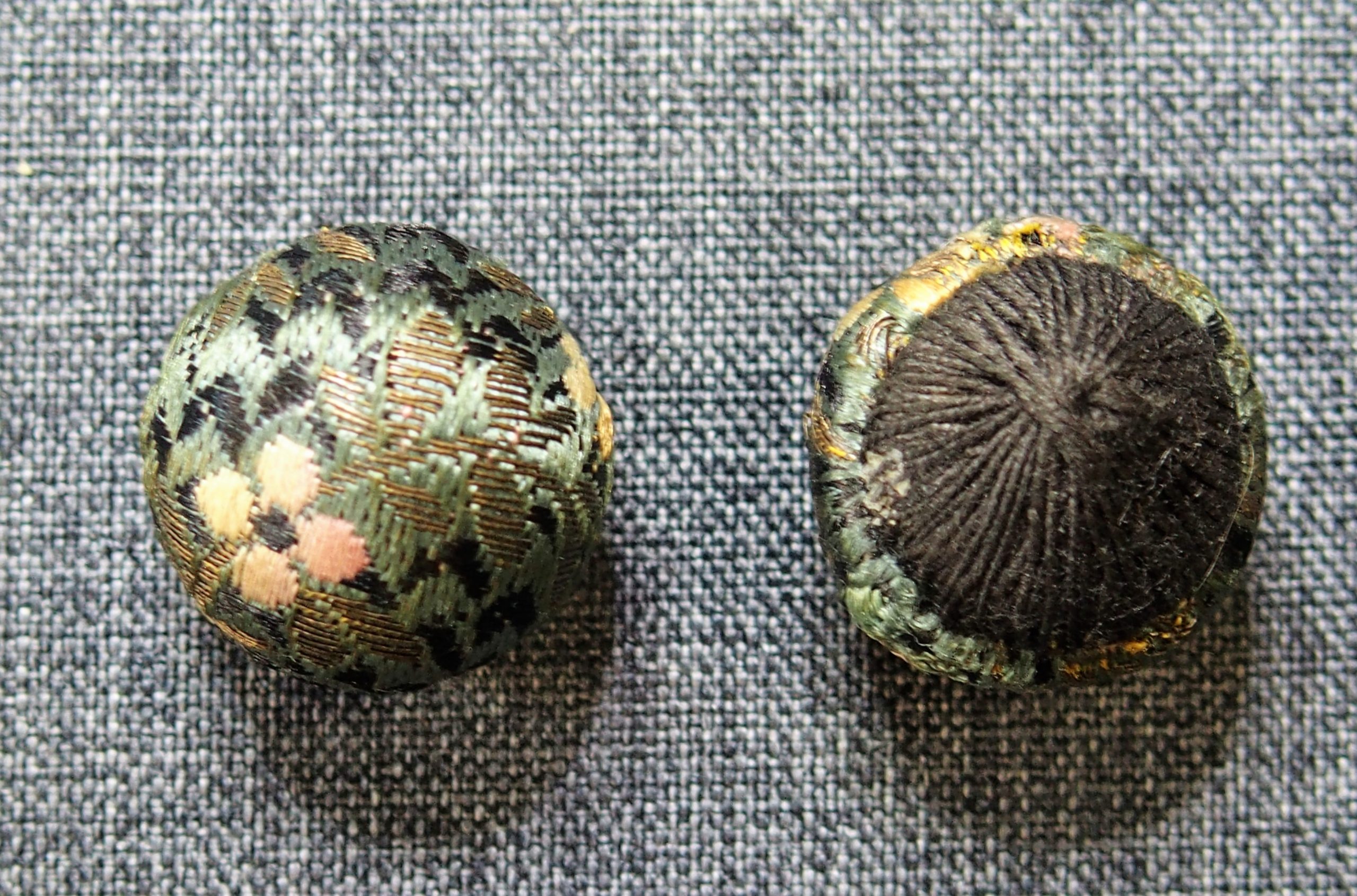
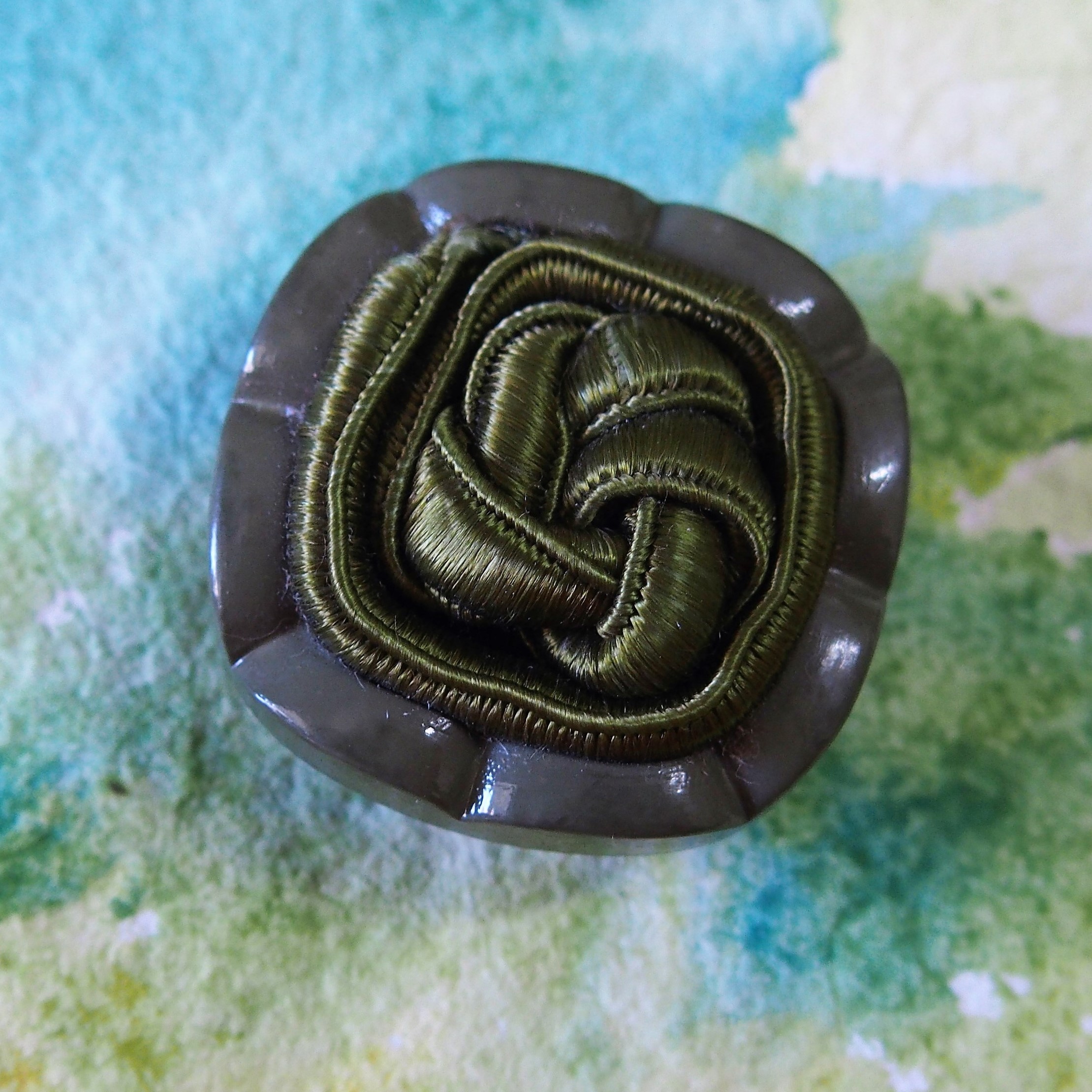
Here are two very old fabric covered buttons. The fabrics are a sort of brocade in lovely colours which don’t really show up to their best advantage. Neither has a shank but a thread back where you need to stitch under a few threads to be able to secure the button to the garment.

ENAMEL BUTTONS

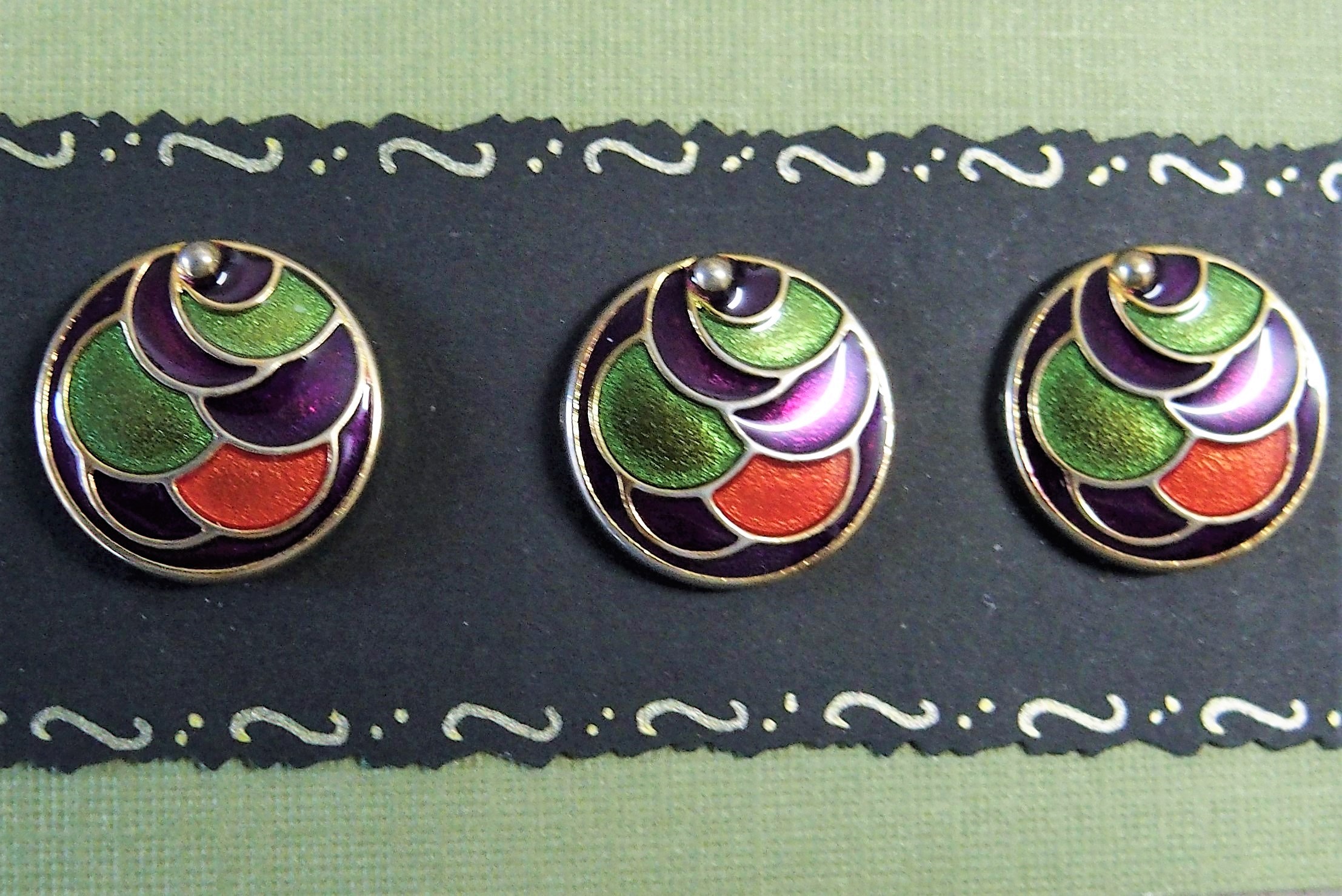
Here are three modern enamel buttons with a sort of geometric design. The colours are much richer in reality. If I remember rightly I got them at a local Opp Shop quite a few years ago. They measure 2 cm. The days of getting good buttons at Opp Shops are over now as they hardly ever have buttons for sale any more. What a pity.

ENAMEL BUTTON

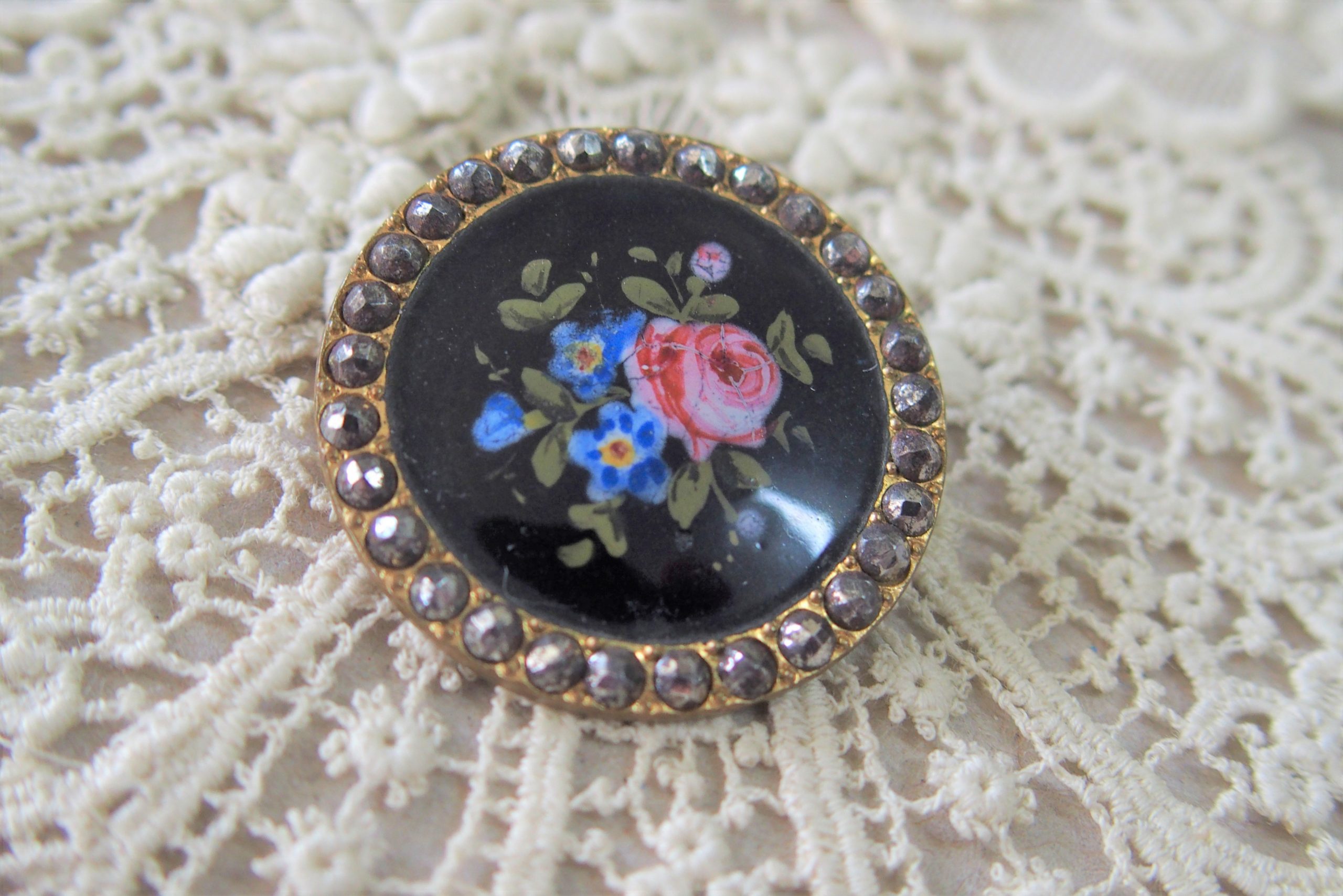
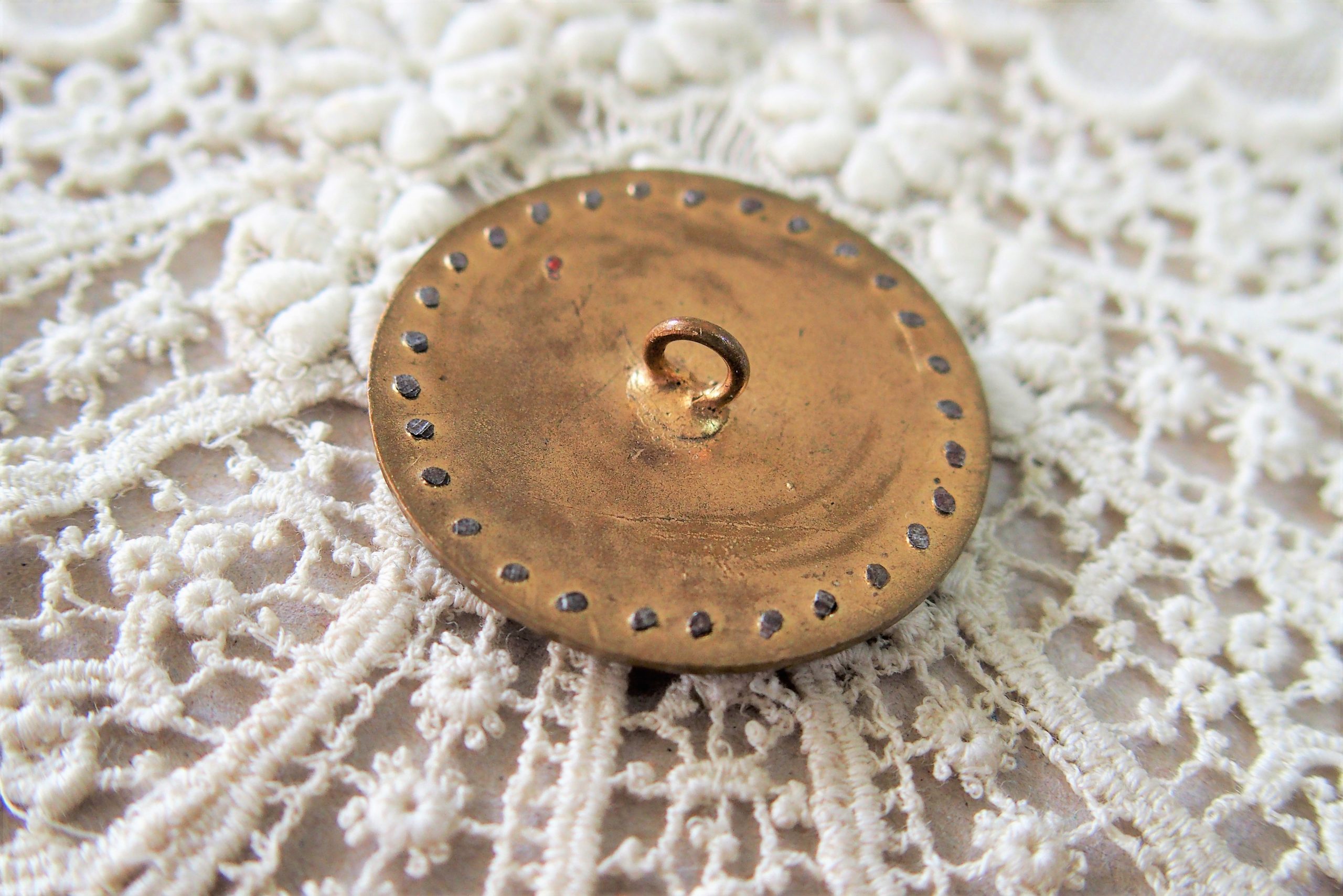
This is rather a nice enamel button I feel with a black background and a group of pink and blue flowers which stand out nicely. It has a border of Cut Steels and you can see on the back where they have been rivetted in separately. It measures 3 cm so is a nice size too.

BLACK GLASS BUTTONS

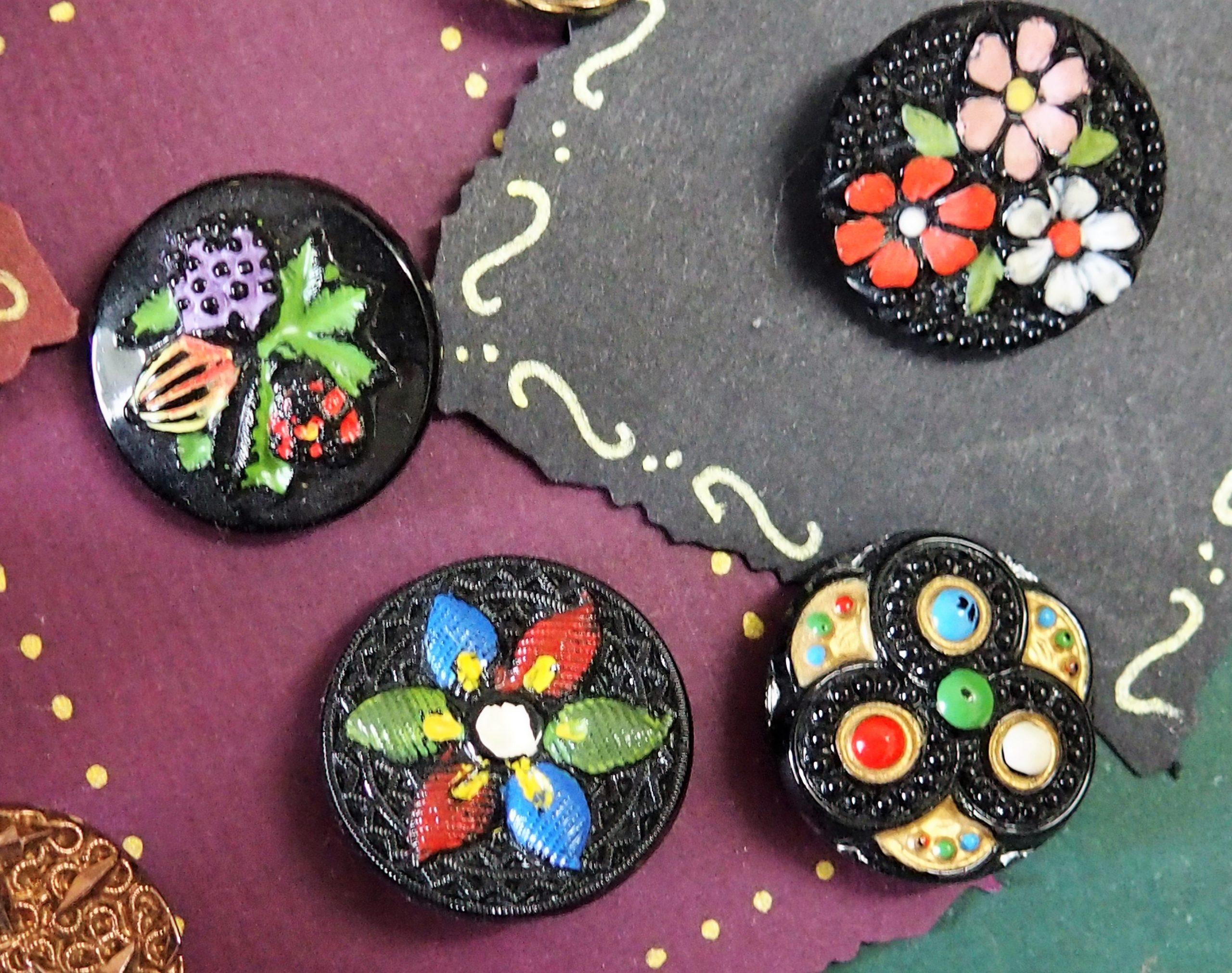
Here is a little group of Black Glass buttons which have a painted design on them. It is not easy to find them with the paintwork in good order as it wears off over time. The painted designs I think would limit the choices of fabric they could be used on; maybe just a plain colour. All of these buttons have a self shank and measure a little over 1 1/2 cm. Black glass buttons do not photograph well and are better in reality.

BAKELITE BUTTONS

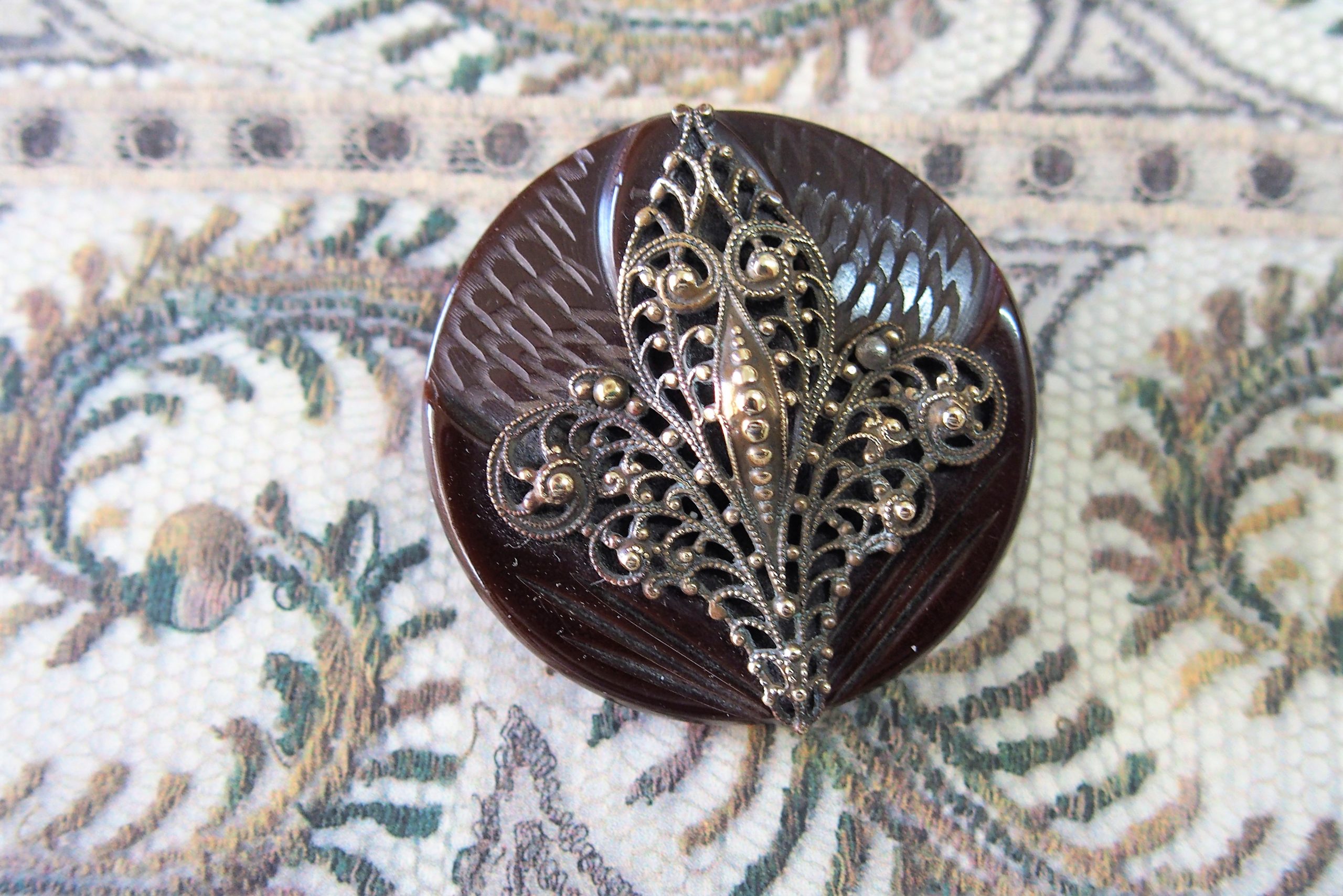
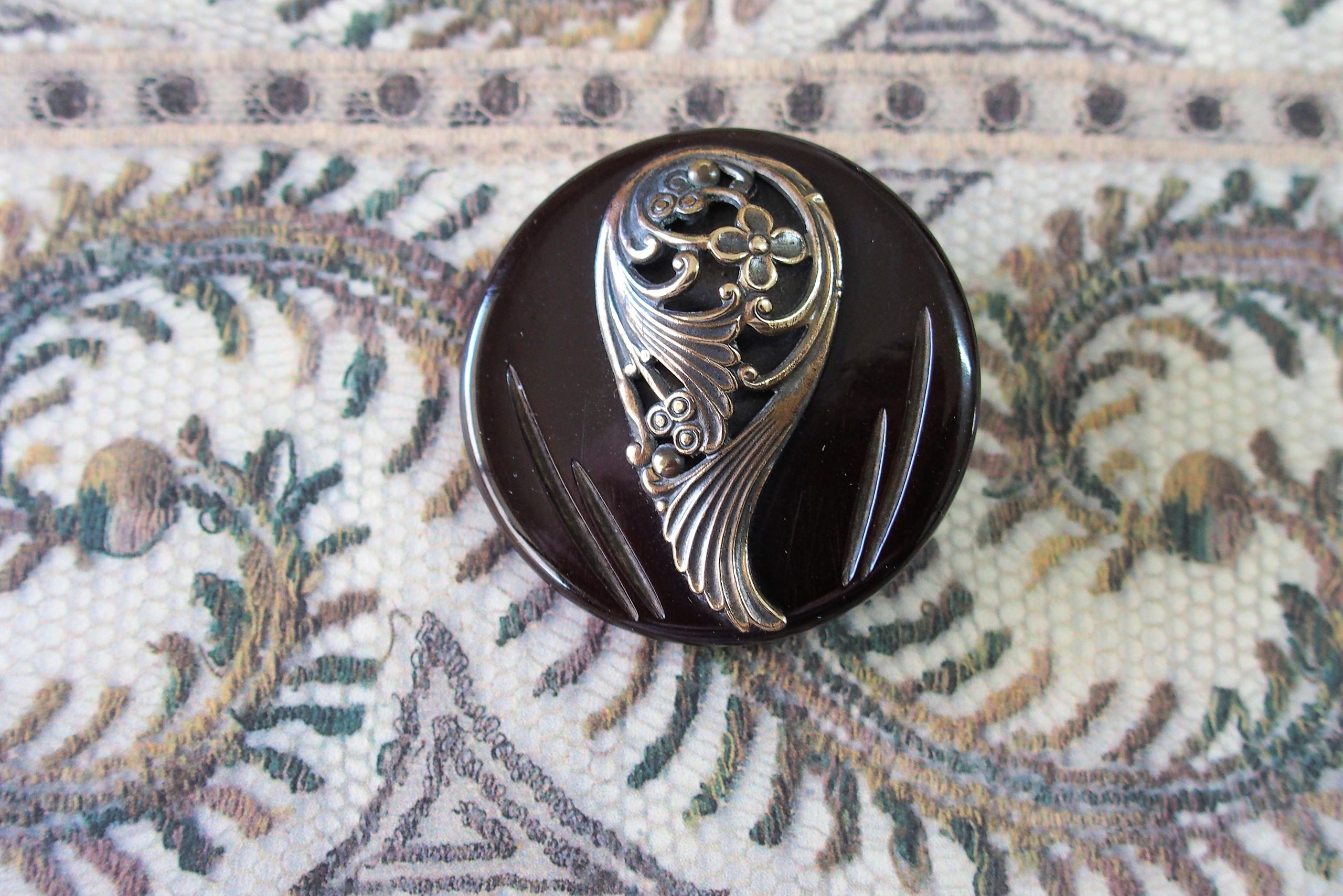
These two Bakelite buttons are coat buttons and both are dark brown with some simple carving. They both have a decorative white metal trim and have a metal loop shank. They measure just over 4 cm. Many of the Bakelite buttons of this period were dark brown or black.

BAKELITE BUTTONS

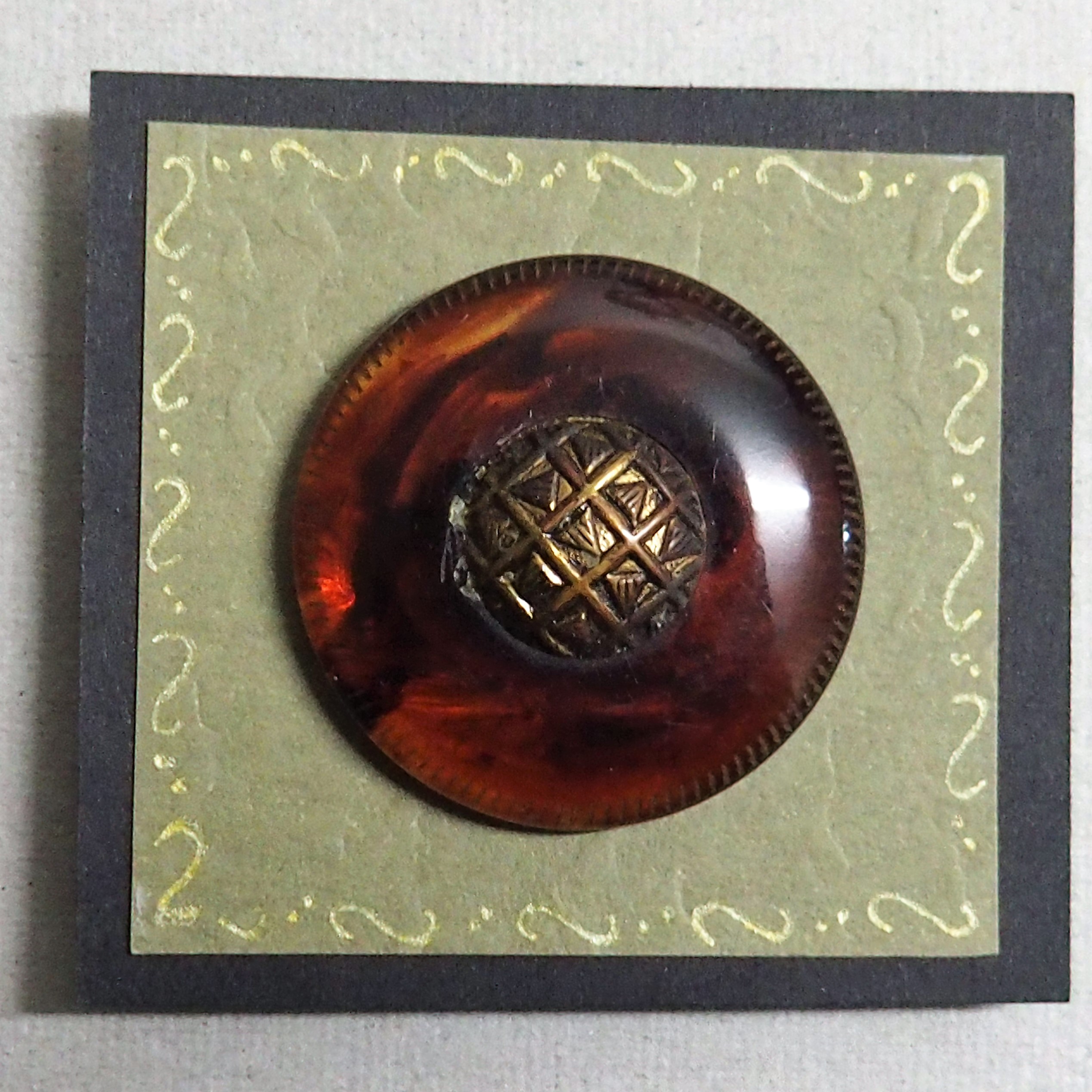
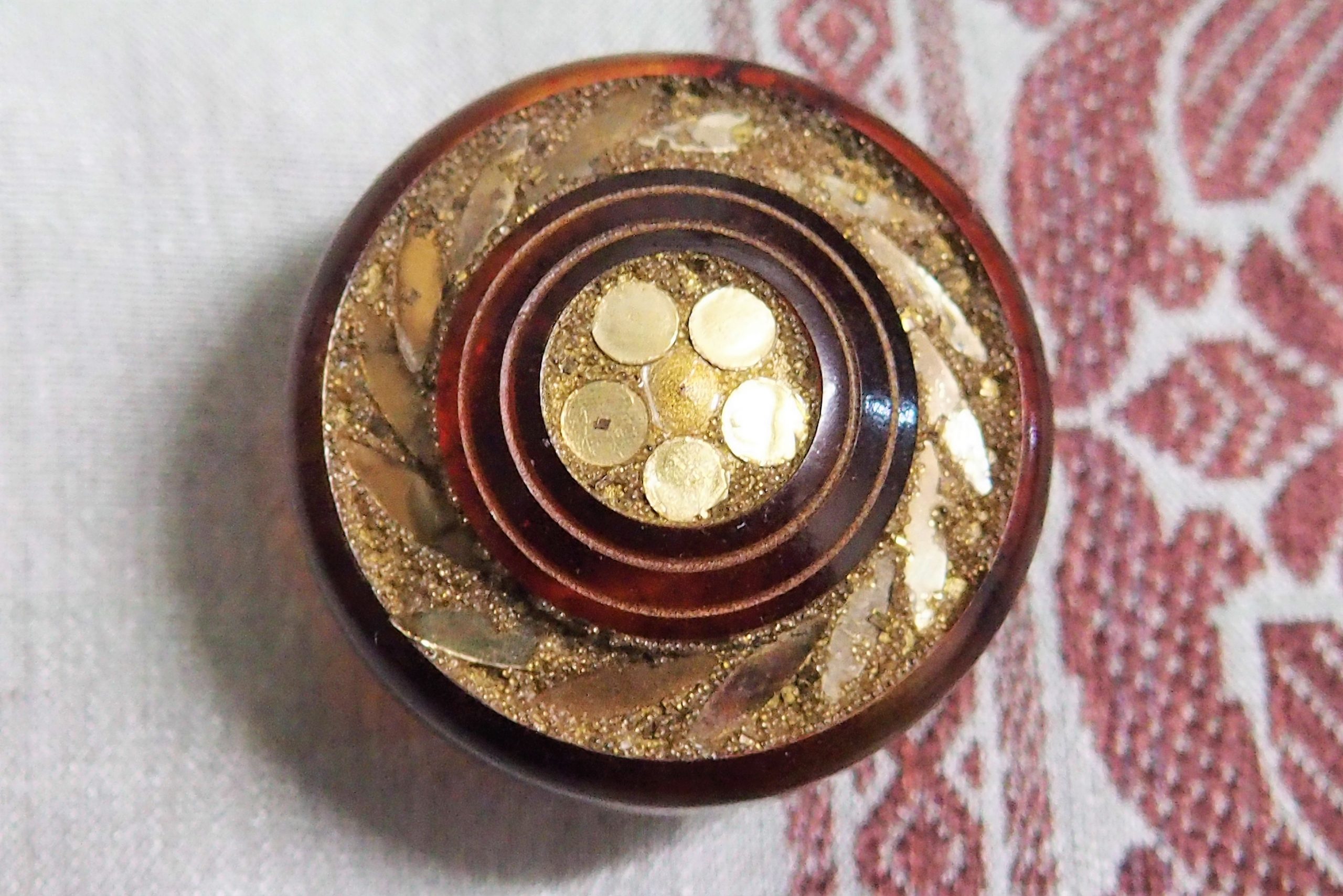
These two Bakelite buttons are entirely different in design. One has a decorative brass disc in the centre while the other has gold inclusions. Actually the one on the left is largest at 3 1/2 cm and the other one is just over 2 1/2 cm. I think they have a brass loop shank but can’t check now as they are mounted in a frame.

MODERN BUTTONS

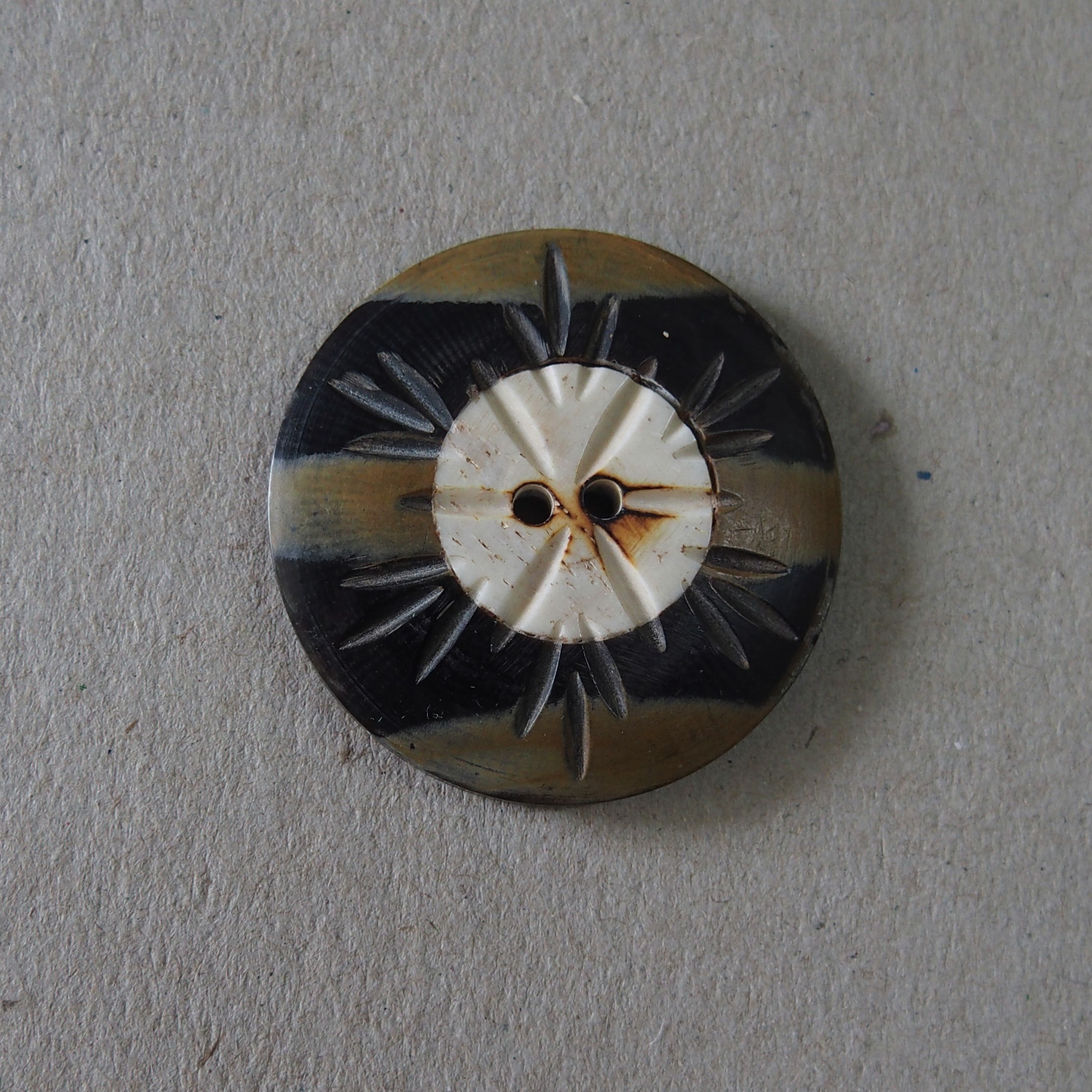
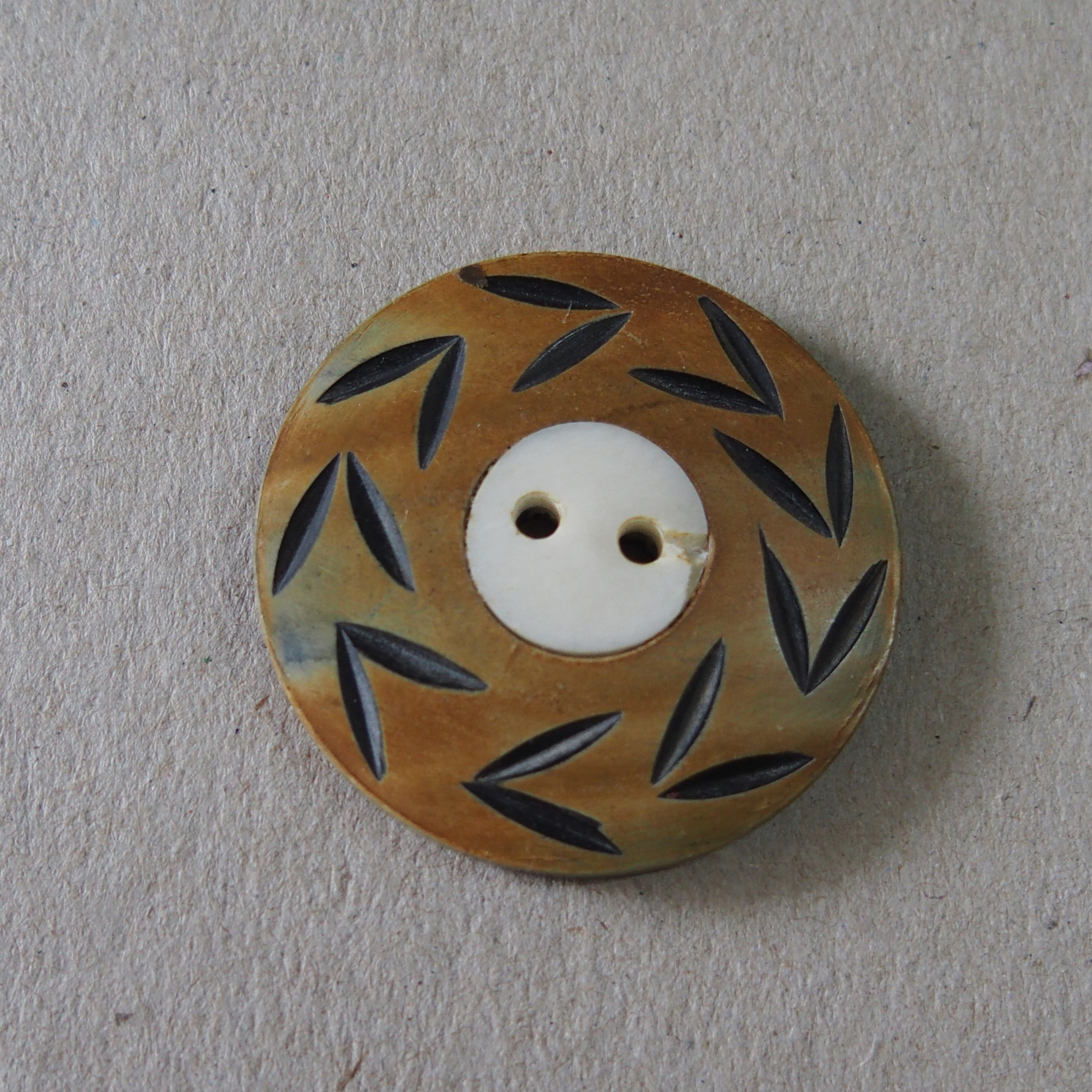
I think these two buttons are horn with a bone centre. They both have a simple design carved in them. I wonder if they were made in Nepal. They would make nice buttons on a tweed overcoat or some natural woollen fabric garment.

PLASTIC BUTTONS

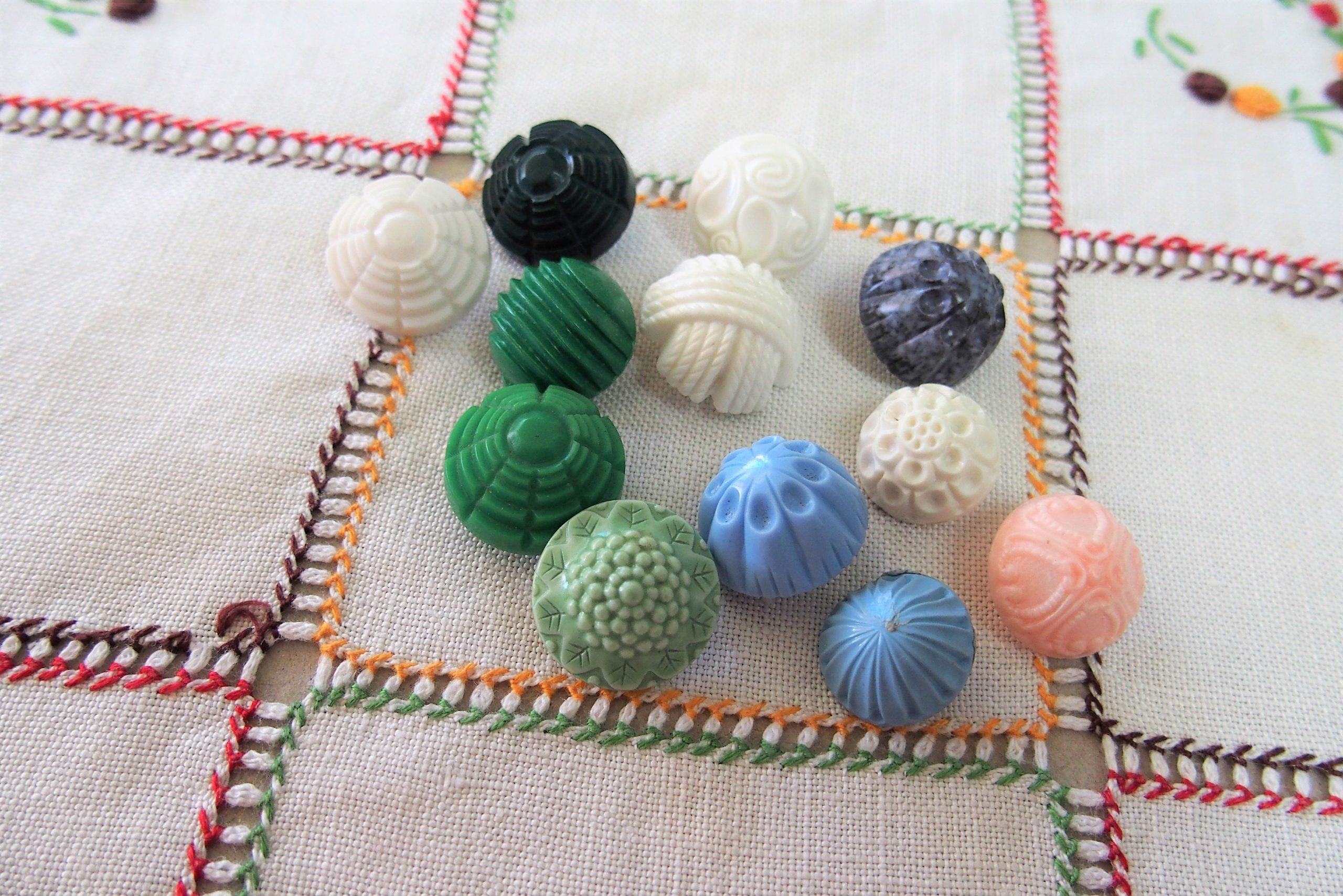
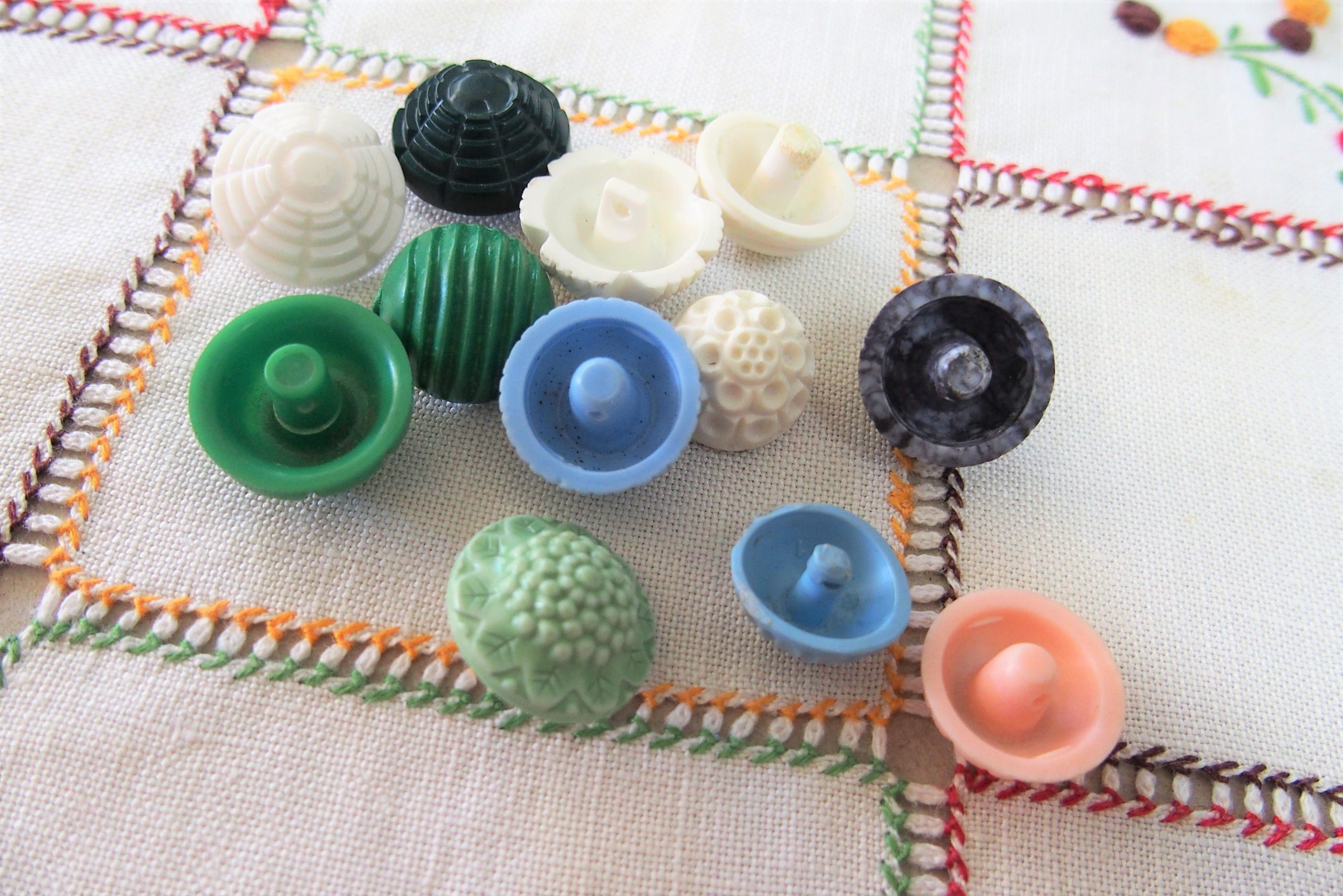
Here are some domed plastic buttons with different designs. I guess they are from the 1940s or thereabouts. The colours are typical of that era, just subtle and not too bright. They would have been used on cotton dresses I imagine.

GLASS BUTTONS

Here are two modern Czechoslovakian glass buttons. I believe they are reproductions of old buttons using the same moulds but am not 100% sure. The back is painted silver. These buttons are readily available.

REPRODUCTION BUTTONS

Here are four white metal reproduction buttons of the early 1900s. They were put out by La Mode and made in Italy. I saw them advertised in a craft magazine and after some chasing I eventually found them in a craft shop in Bendigo, Victoria. There were quite a few of them but I did not buy the full set. They are well made and it would be interesting to see one of the original buttons to compare. I bought them in 2010.