ENAMEL BUTTONS

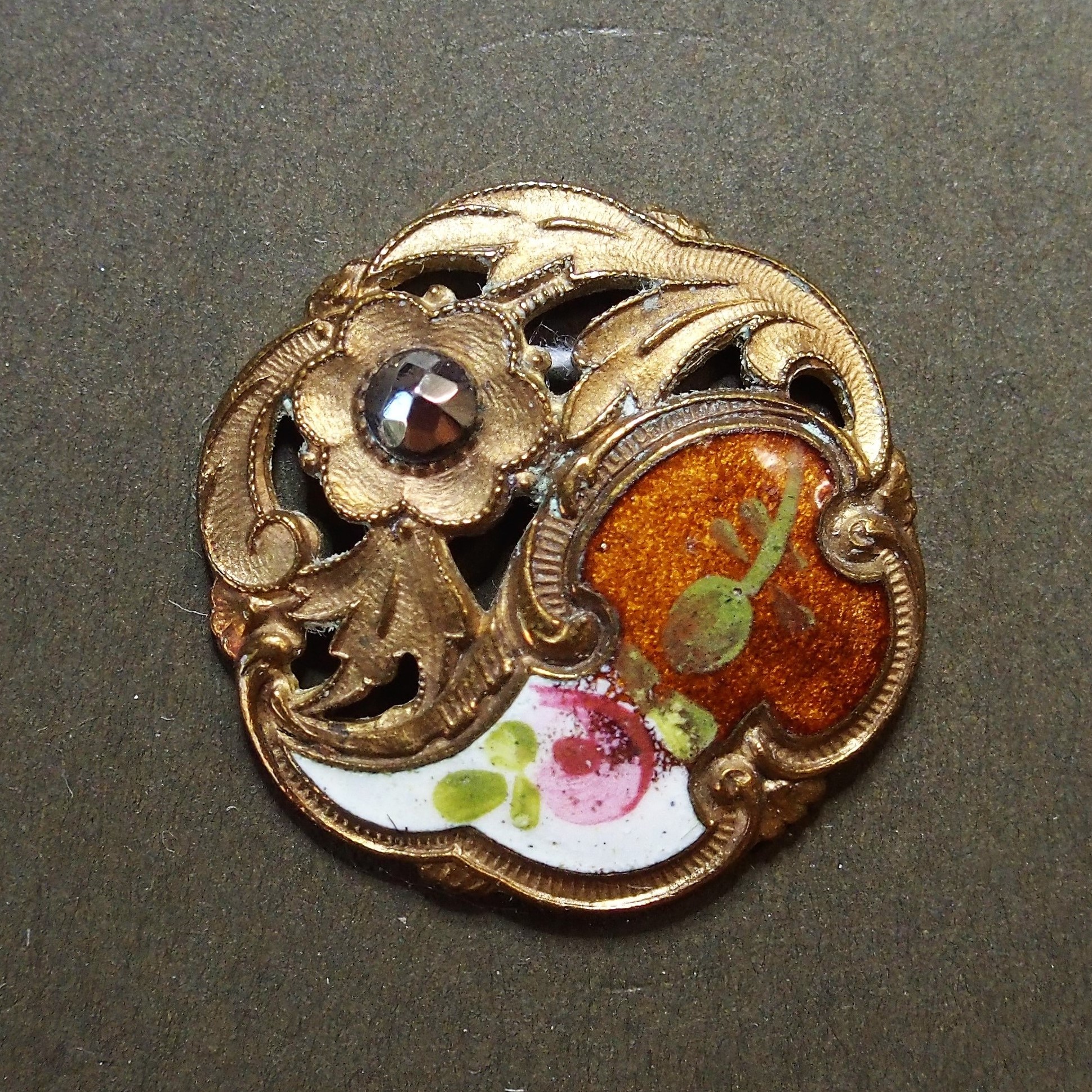
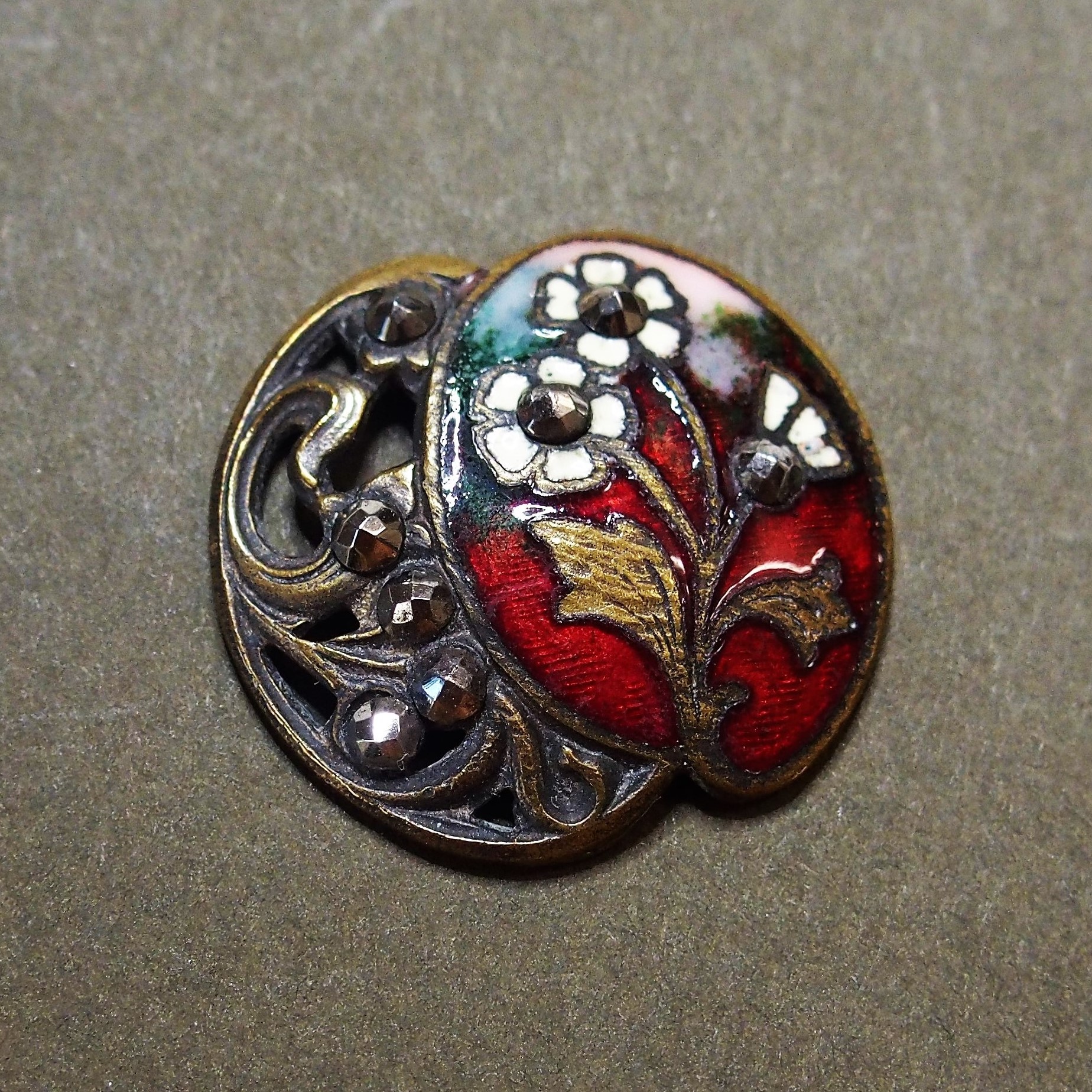
I think I bought these two enamelled buttons together because they were so different to a lot of my others. They both are unusual colours, are pierced and have cut steel trim so have similarities in their design. The orange one with the pink rose on a white ground is so different and the red one with some blue has white flowers and not pink roses which are very common. So all in all they are interesting buttons.
SILVER BUTTONS

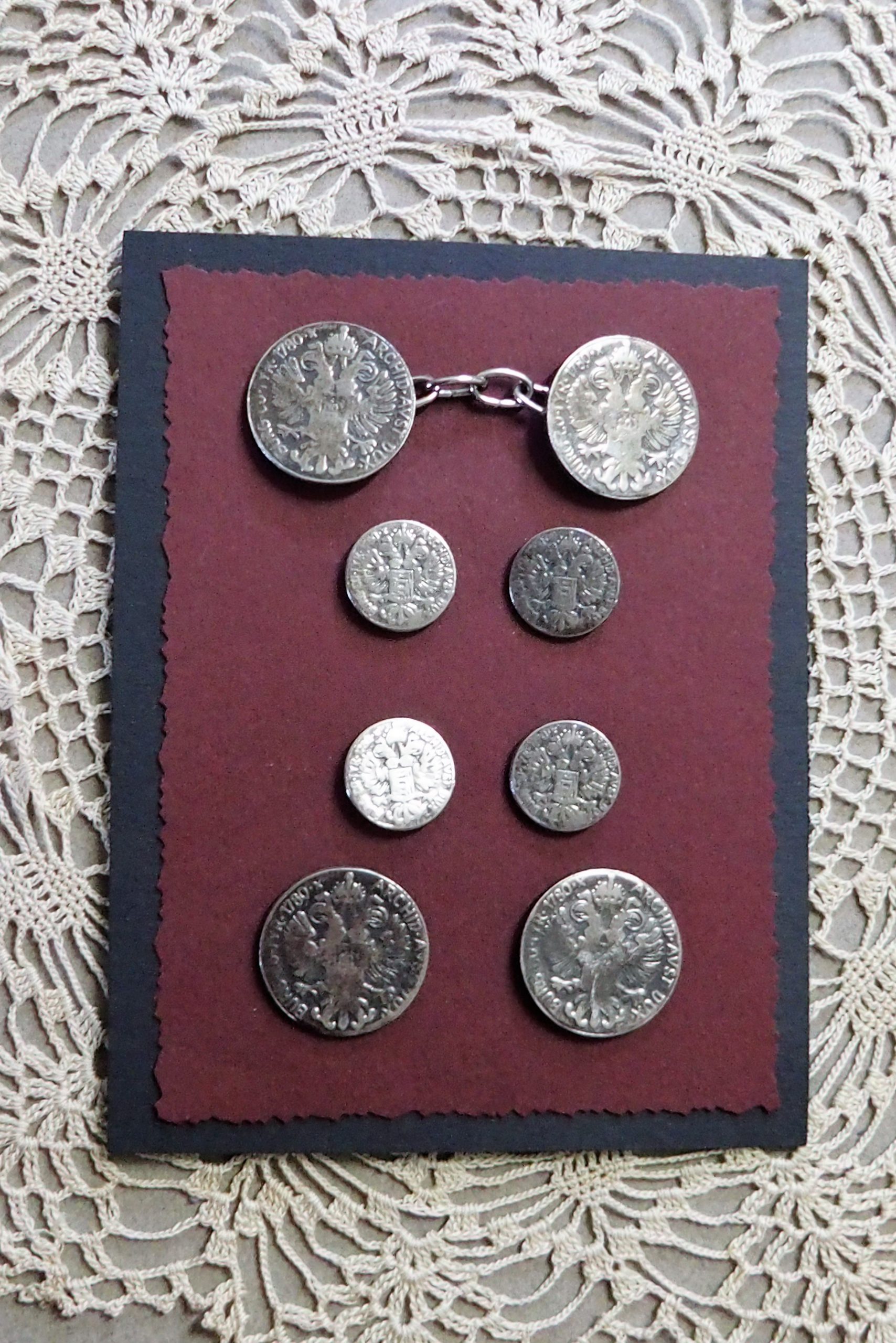
Here is a European set of Peasant Jacket buttons coinlike of the Thaler which was originally struck in Austria from 1740 – 1780. It is the reverse of the coin which is shown on the button which depicts a combined Coat of Arms of Imperial Austria. Printed around the edge is ARCHID – AVST DUX BURG CO TYR 1780 X which in full is ARCHIDUX AUSTRIAE DUX BURGANDIAE COMES TYROLIS. This is the grand title of Maria Theresa which translates as : Archduchess of Austria, Duchess of Burgundy, Countess of Tyrol. In the set are four large buttons; two being linked together and four small buttons. They are blank on the back and have a looped shank.

PLASTIC BUTTON

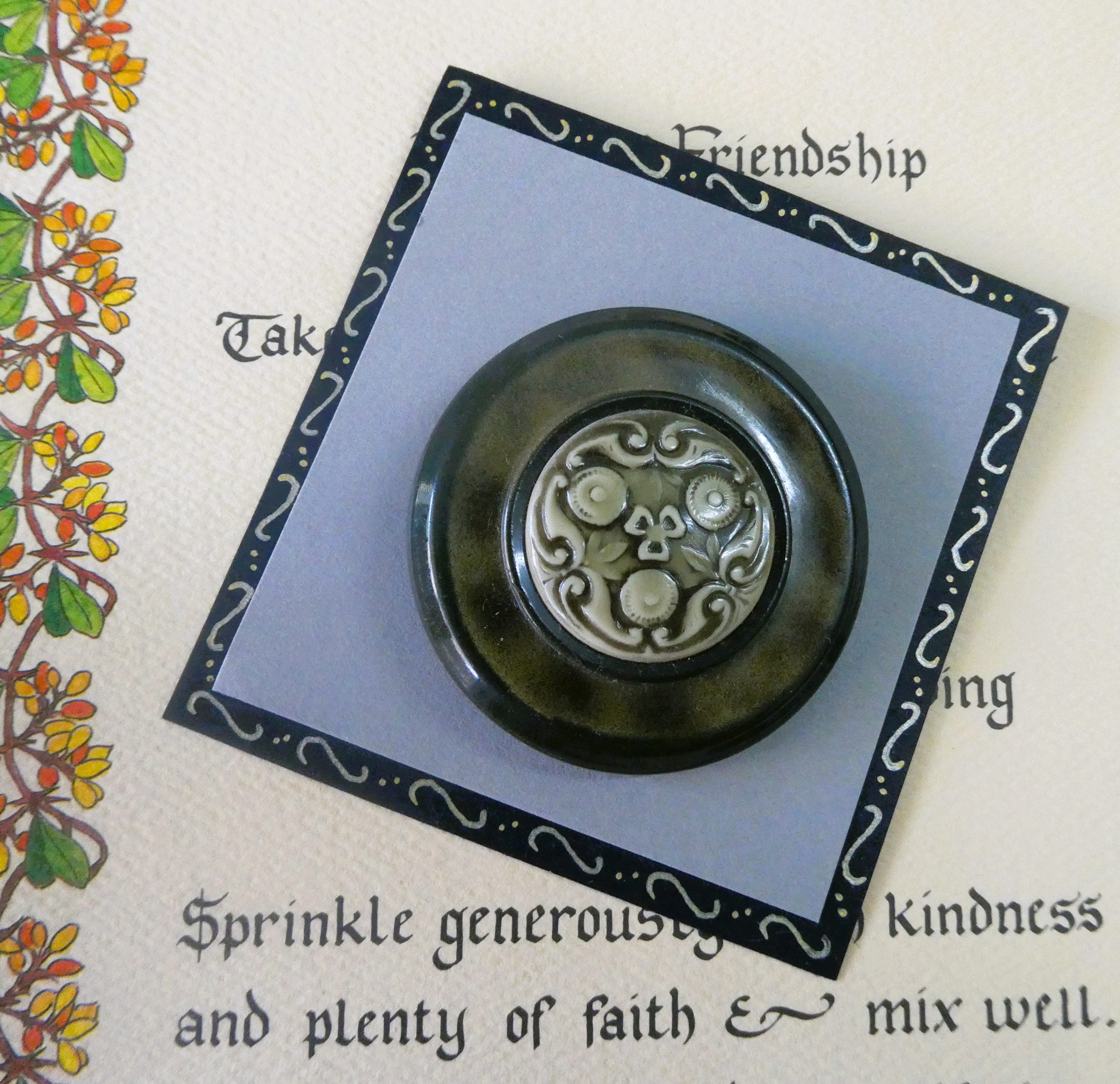
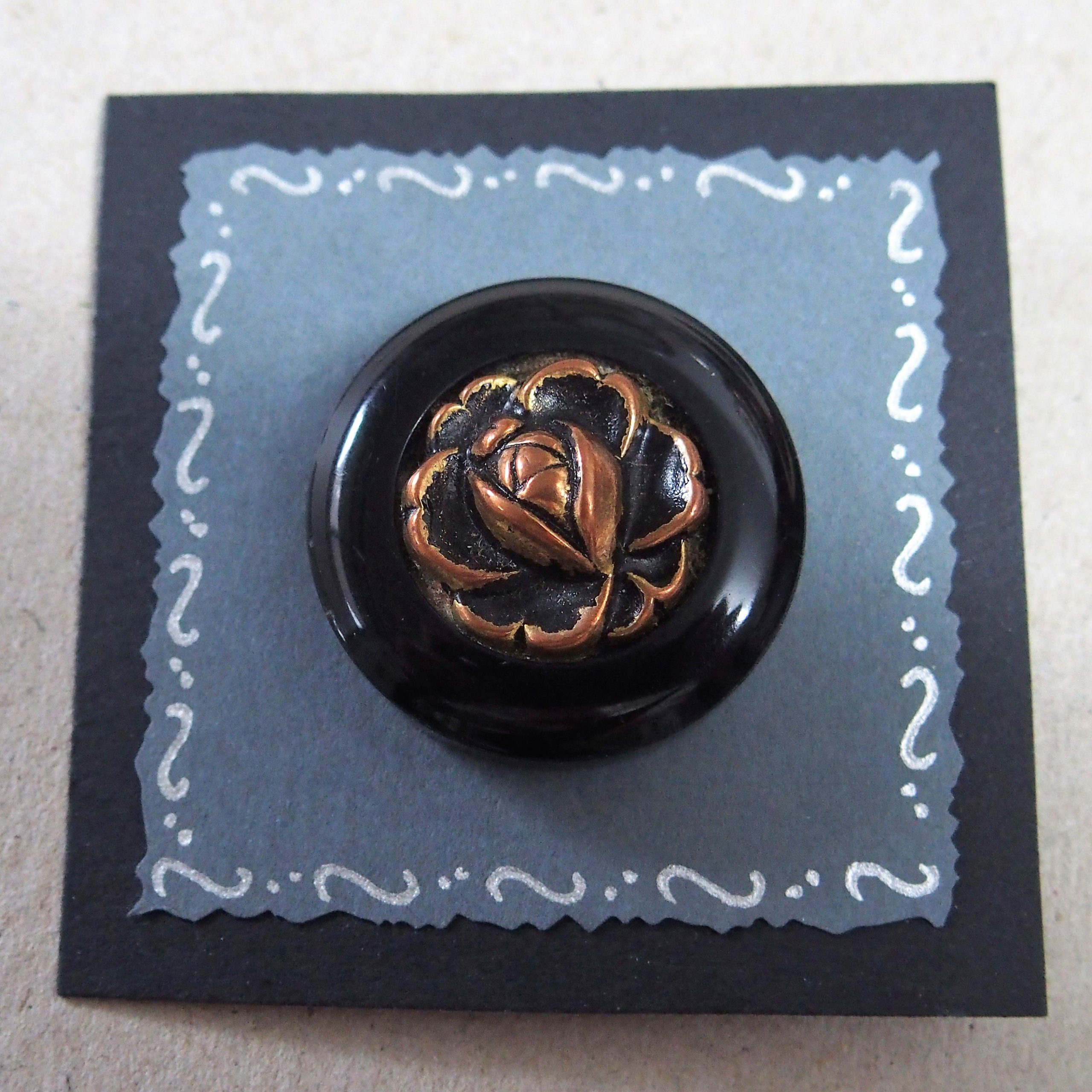
This button I have in my drawer that I call two materials or more. This one is black plastic (or maybe it is Bakelite ; it is rather chunky) The middle is metalized plastic and shows a rose which is a very common design. I have several buttons with just the rose in gold or silver. This particular button measures 3 cm and has a metal loop shank. I think it may be from the 1930s.

CELLULOID BUTTONS

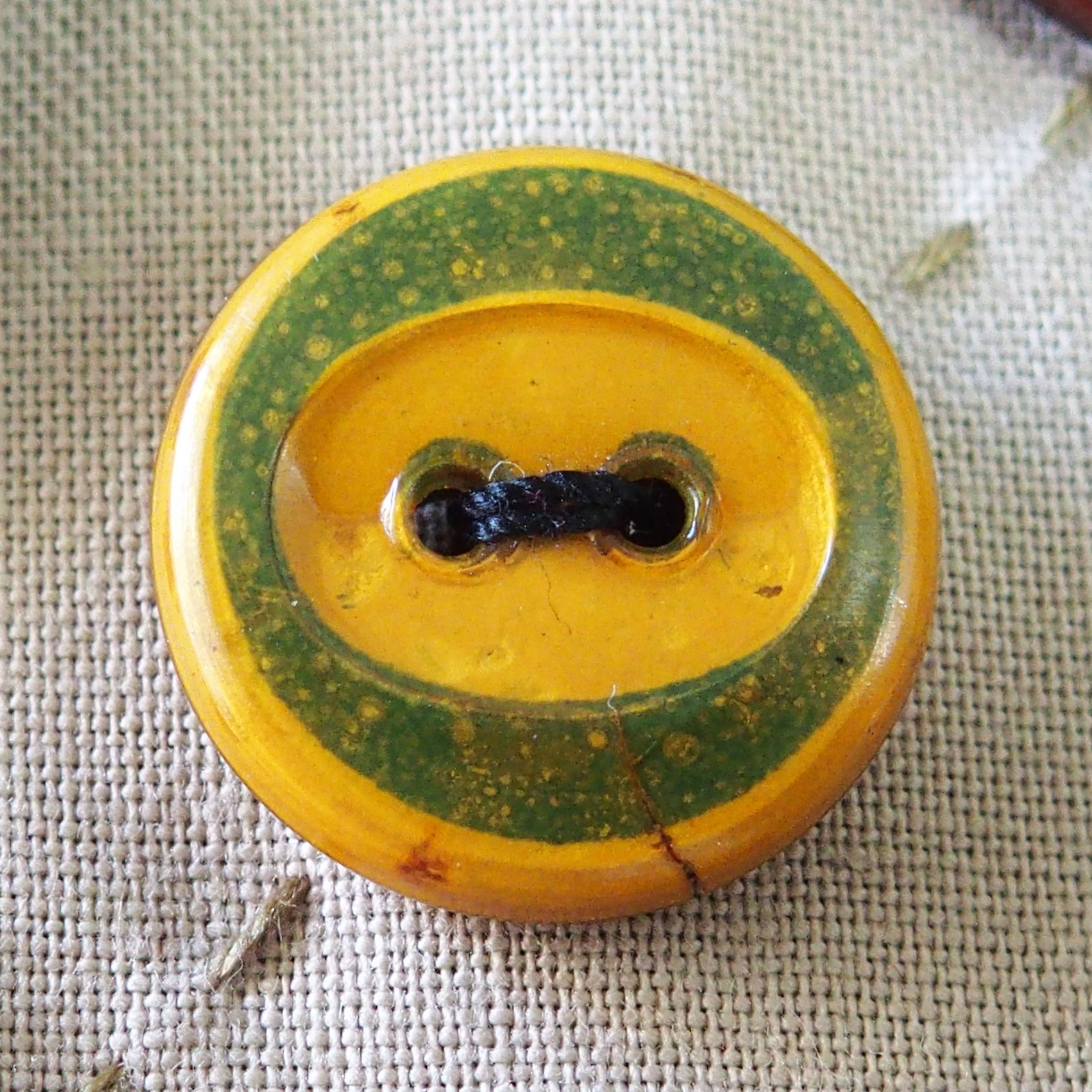
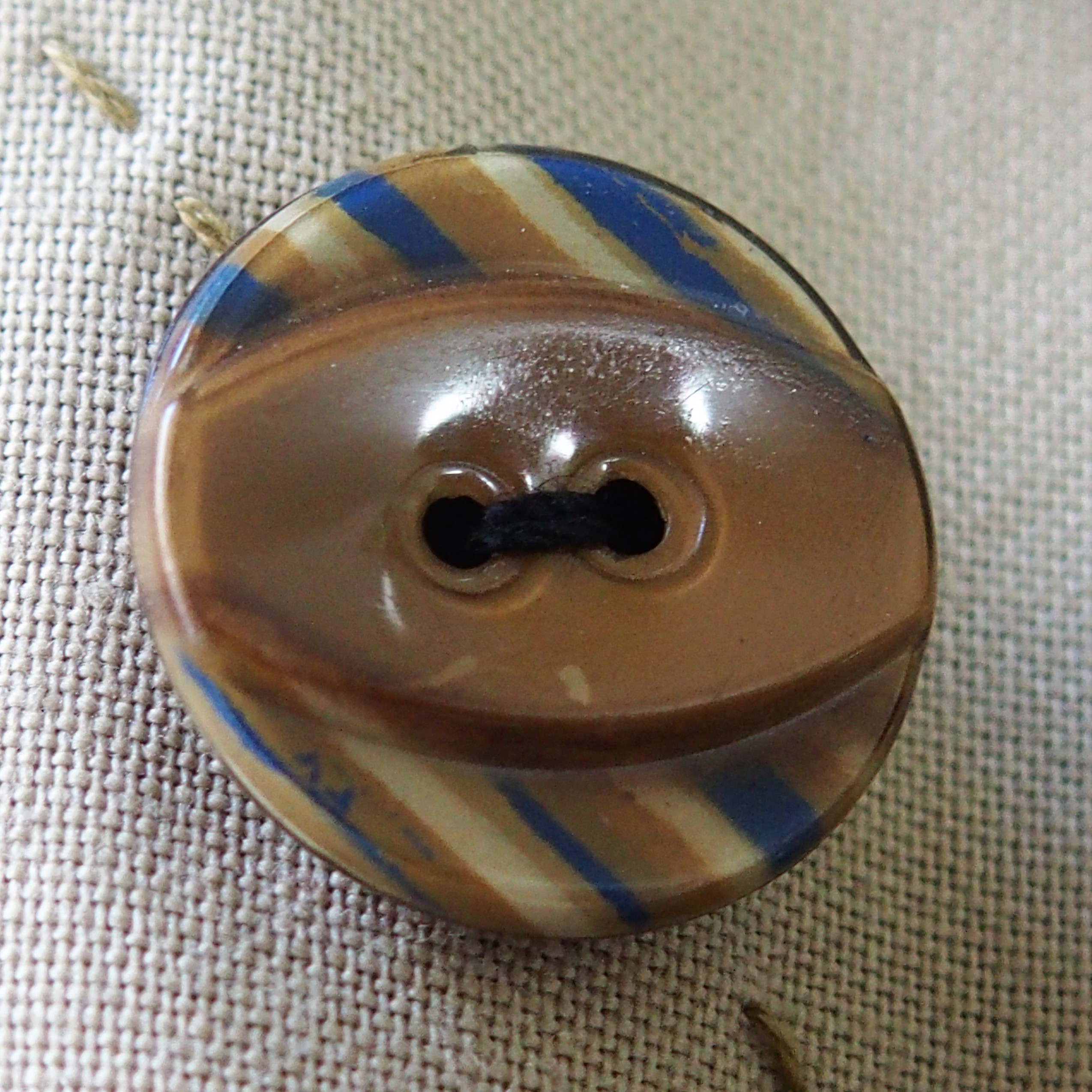
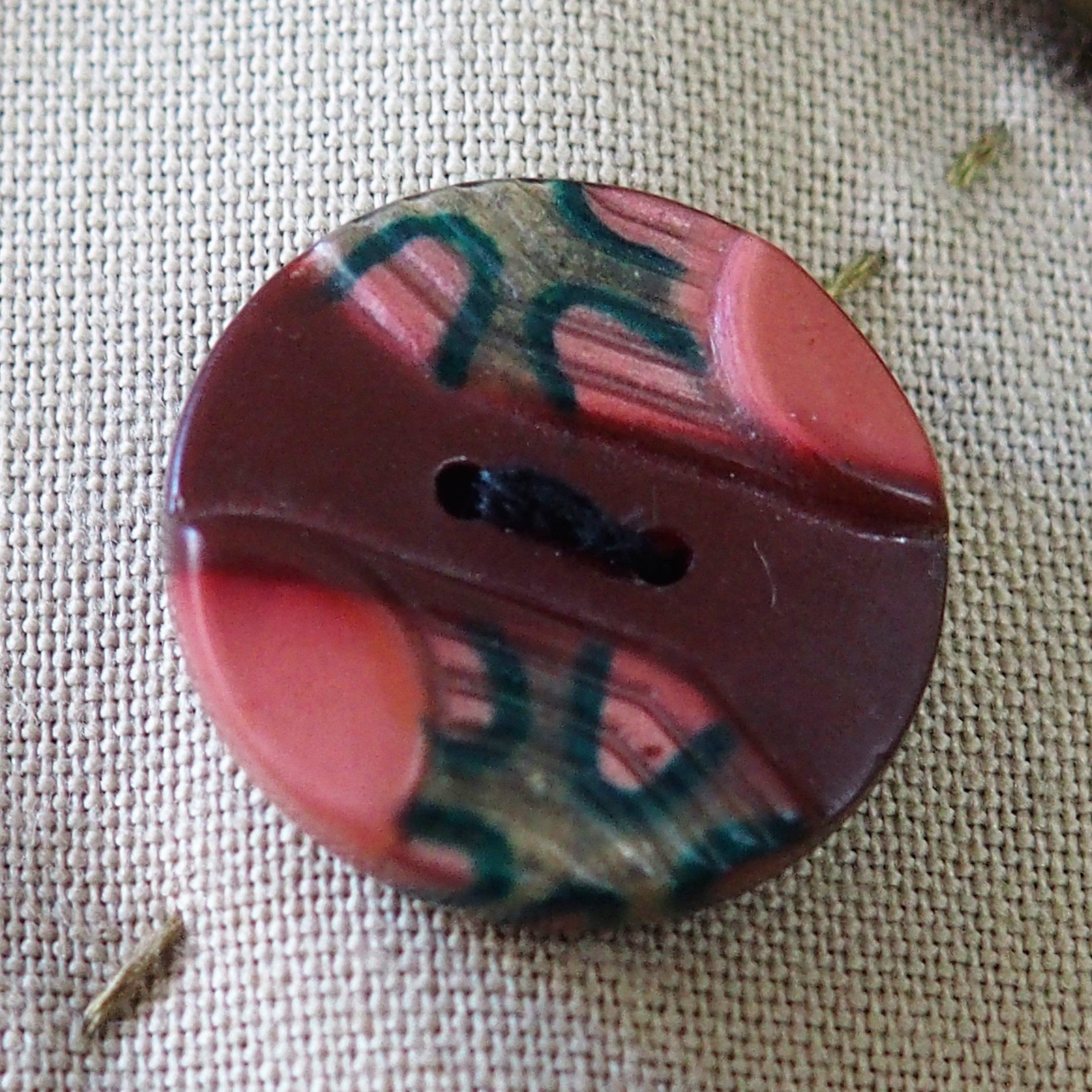
Here is a group of six Celluloid buttons; all two hole sew through type. I like their colours and simple designs; some with stripes and a sort of check and some risen up areas so they are not completely flat. I have them on a stitched banner with other Celluloids and they make quite a nice display.

PORCELAIN BUTTONS

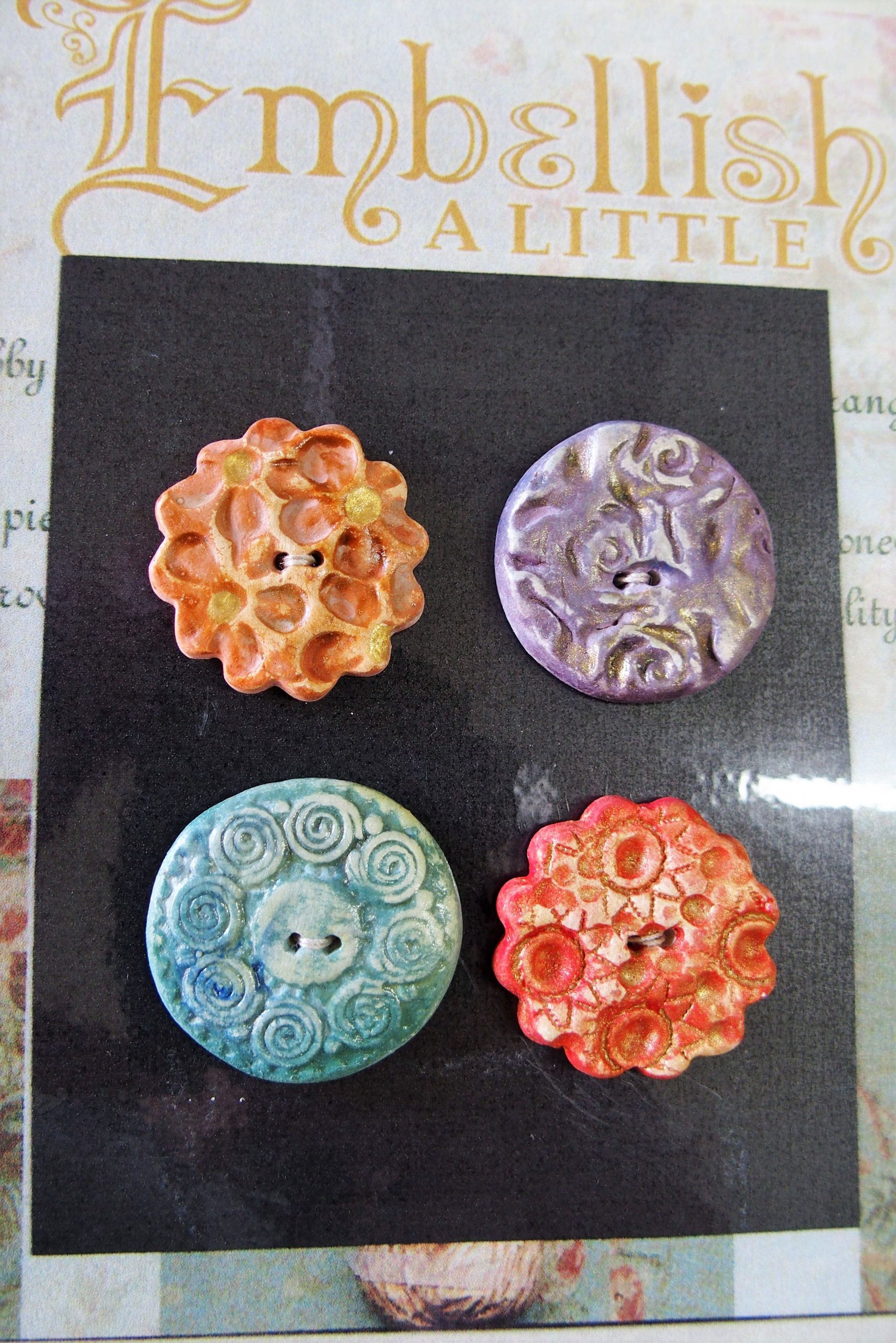
These four porcelain buttons were handmade by Jennifer Warburton from Phillip Island , Victoria in 2012. The picture does not show them at their best. The colours are nice and the designs are imprinted in them. She trades under “Embellish a Little” They measure between 2 1/2 & 3 cm.

CUT STEEL BUTTONS

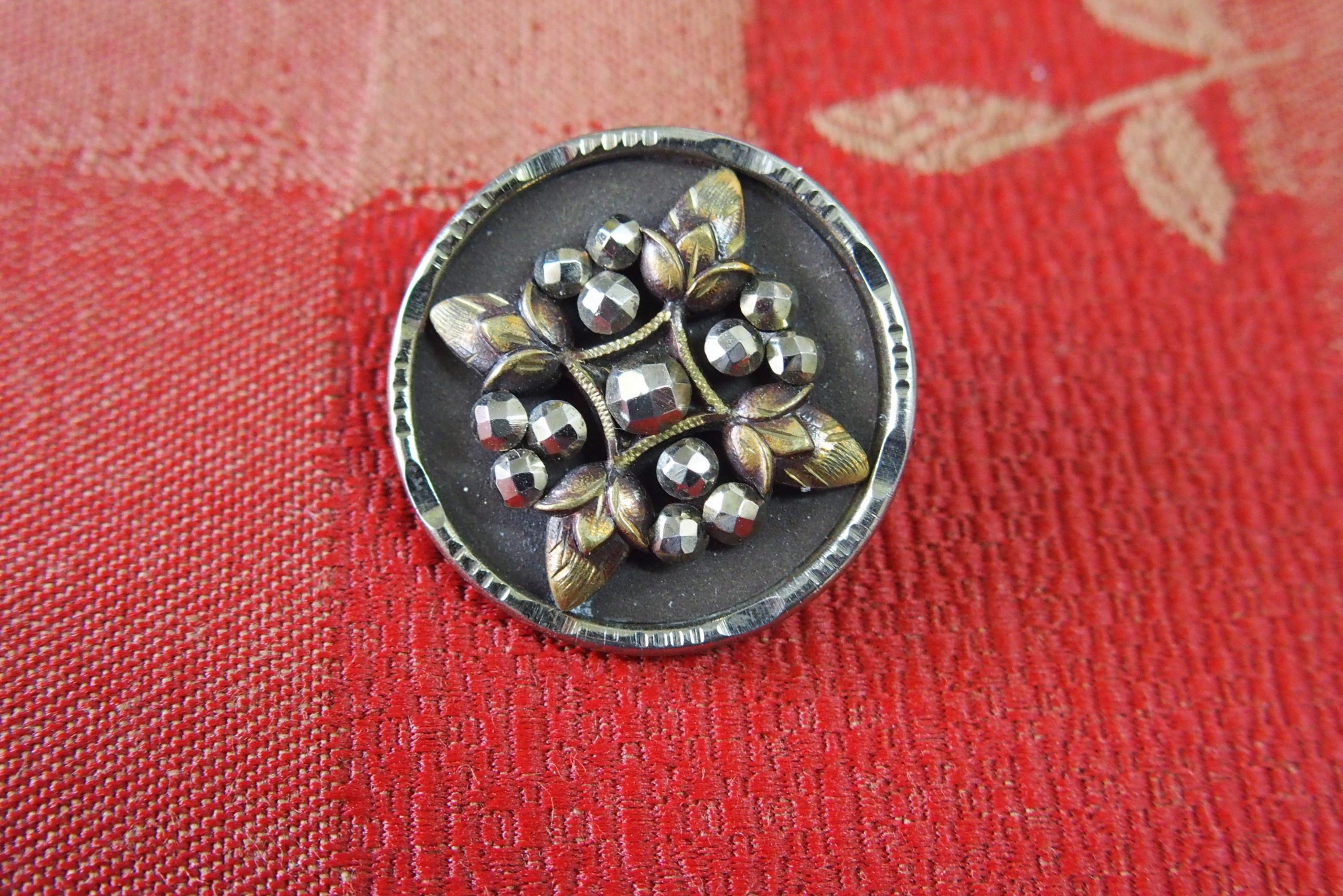
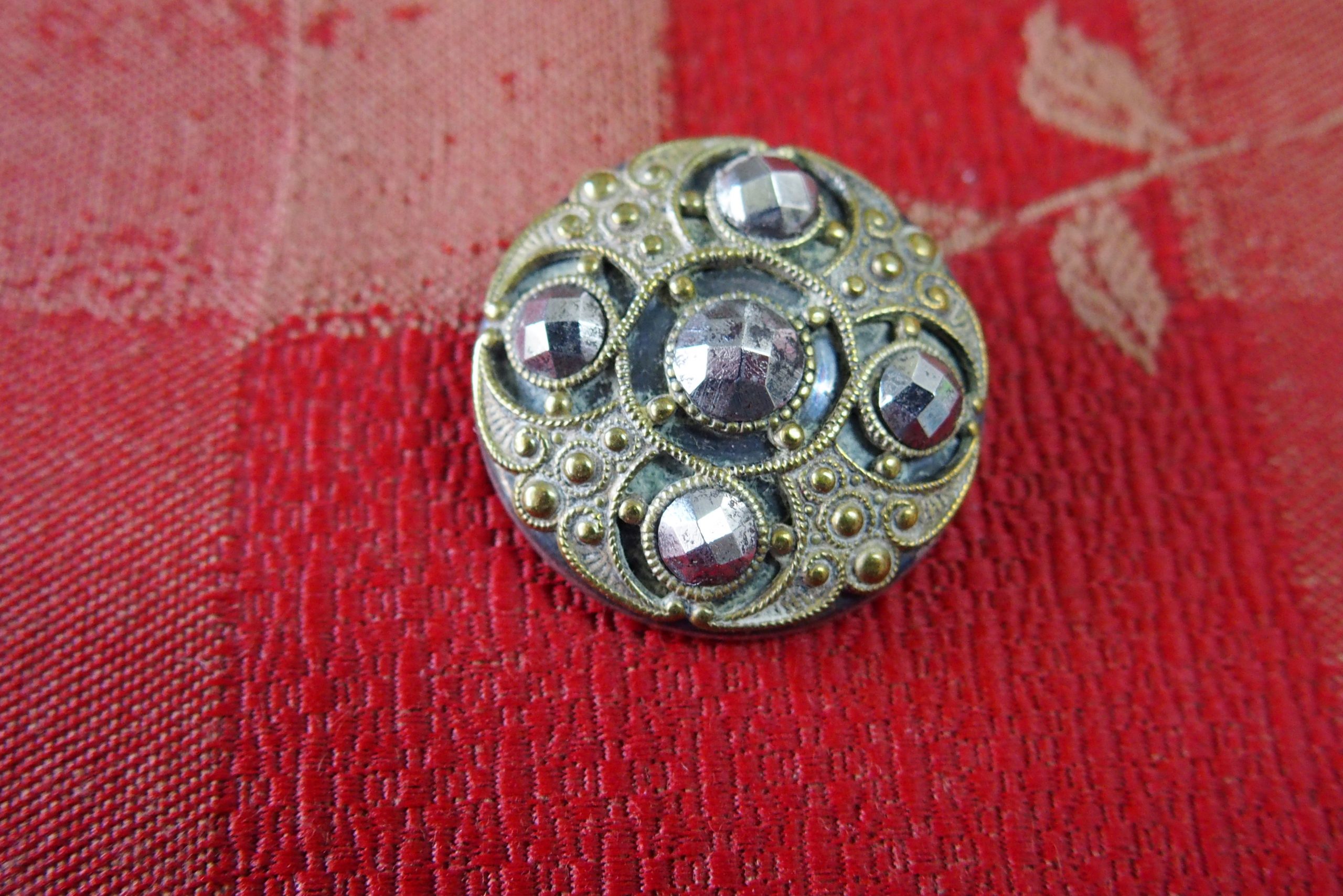
These two Cut Steel buttons are quite different to one another. The one on the right is brass with five large Cut Steel set in the circles and is convex. The other one is of white metal and a black background which makes the central design stand out. It has twelve small Cut Steel in sets of three with one larger one in the centre. They both have a metal loop shank and measure a little over 2 1/2 cm.

CELLULOID BUTTON

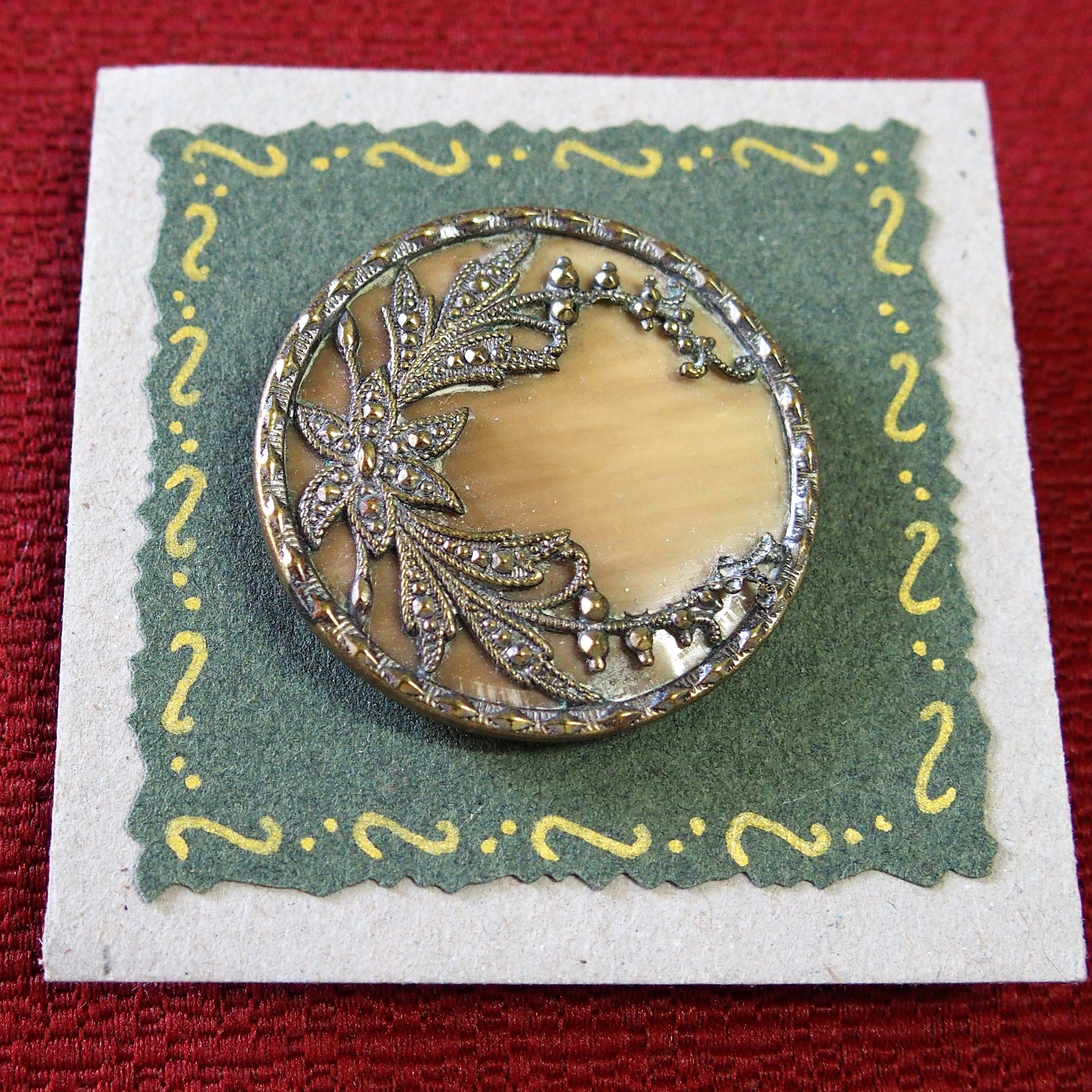
Here is a Victorian Celluloid button or Celluloid Back button. I rather like it for it’s delicate metal floral design over the light brown back. I have quite a few of these types of buttons and lots of them in shades of grey and brown. I think they were popular colours of the time. As common this button has a japanned back and brass loop shank. It measures a little over 3 cm.

WHISTLE BUTTONS

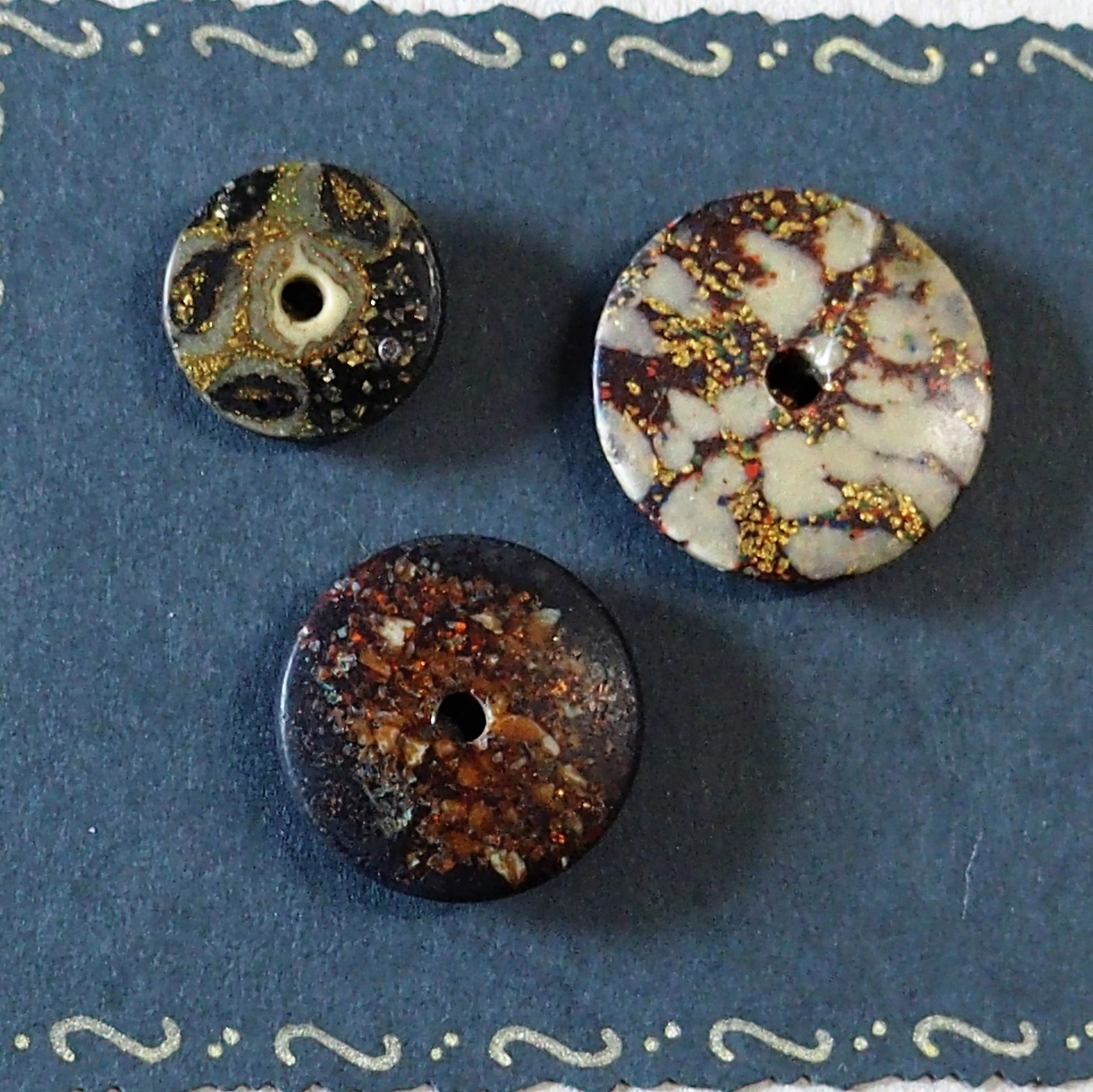
These three Whistle buttons are made of Composition which to my way of thinking is a mixture of left overs like sawdust, stone filings etc. and some type of glue with I imagine some type of hardener to set it. A Whistle button has one largish hole in the front with two holes in the back and that enables you to sew on the button and the thread is down in the hole and can’t rub or wear out. Do I sound like I know what I am talking about cos I am trying!! Apparently in the old days there were small whistles that were similar to these buttons, hence the name.

BAKELITE BUTTON

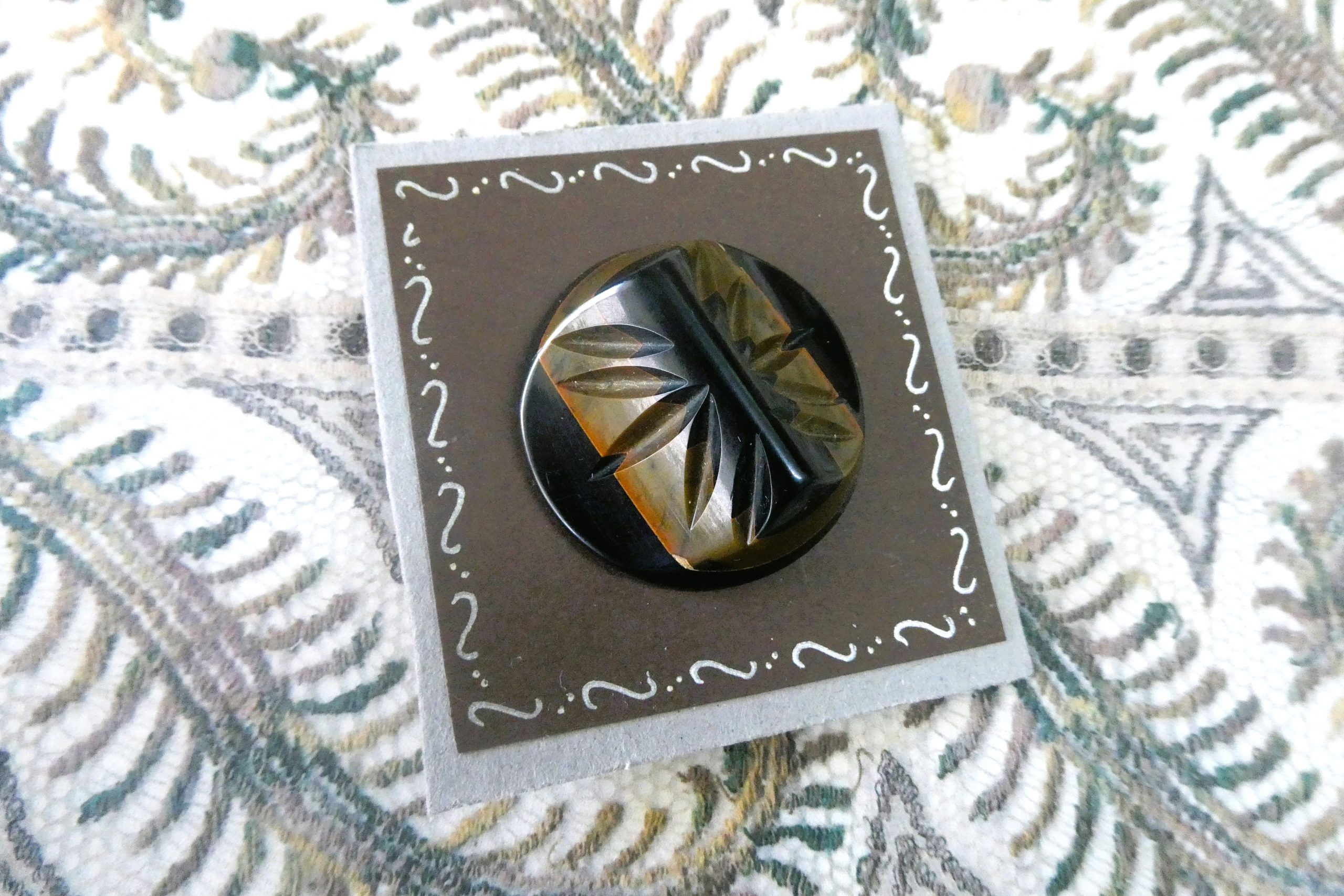
Here is a good looking layered and carved Bakelite button. To me all the large chunky carved Bakelite buttons are of good quality. It is layered black, applejuice then black again and is cut away at the two sides leaving the highest point in the middle. It would look very smart on a black coat. It measures a little over 3 1/2cm and has a metal loop shank.

CELLULOID BUTTON

This Celluloid button is rather nice in a khaki/brown colour with a central disc of buffed celluloid which blends nicely with the outer. It has a japanned back and measures just under 4 1/2 cm so is rather large; presumably an overcoat button.